Corrugated Planes are Groovy, Baby!

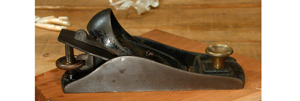
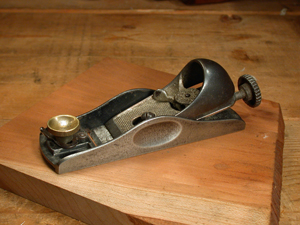
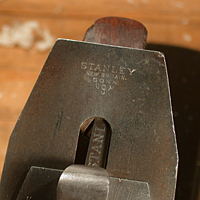
Stanley Bedrock no. 607C, c. 1911

Let me just put it out there right up front – I like corrugated planes.  Sure, their practical value is questionable.  I don’t care.  I like them, and all of the bench planes I use, as well as most of those in my humble collection, have corrugated soles.

Corrugations are a series of grooves milled into the sole of the plane.  Running front to back and spaced about 1/8″ apart, they stop short of the mouth at both the front and rear sections.  Introduced to the Stanley line of bench planes in 1898, corrugations were available on all sizes from the no. 2 through the no. 8, as well as the comparable sizes in the Bedrock series.  The no. 1 was never offered with a corrugated sole, and the no. 5-1/4 wasn’t introduced until 1921.  All the others, however, were available with corrugations and were distinguished from the plain versions by the suffix ‘C’ appended to the model number – nos. 2C, 3C, 4C, etc.  All the corrugated models were sporadically discontinued between the mid 1940s and mid 1960s.

While some argue that the feature was more a competitive marketing vehicle than a functional improvement, Stanley offered no explanation in its 1898 brochure, only stating “corrugated bottoms furnished without additional expense if so ordered.”  The reasoning most frequently accepted has to do with the vacuum created between two flat surfaces in contact with each other.  I’m no physicist, but I do know a little about science.  While this phenomenon is easily demonstrated with two sheets of glass, I have a hard time believing that wood is capable of creating much of a vacuum when in contact with something as small as the sole of a plane, even the large ones.

In my opinion, the reason why corrugations might work in theory is a simple matter of reduced friction.  Friction is defined as the resistance an object encounters in moving against another object.   Imagine that you are trying to push a plane across a board. If you apply a very small force, the plane will not move.  The frictional force between the two surfaces is greater than the force with which you are pushing the plane.  If the frictional force was less than the force you exert, the plane would slide forward.   So, in order to move the plane, you can do one of two things – reduce the frictional force of the plane against the board on which it sits, or push harder.

By milling grooves into the sole of the plane, Stanley reduced the amount of surface area that contacts the wood, the effect of which was to reduce the coefficient of friction between the two surfaces.  In theory, this should make a corrugated plane easier to push forward than one with a smooth sole.  This makes more sense to me than the theory of a vacuum created between the two surfaces, but I’m sure some will disagree.

Whether or not using a plane with a corrugated bottom provides a noticeably different experience to the average woodworker is debatable, but the idea clearly gained traction (no pun intended).  While less common than their flat soled brethren, corrugated versions were successfully sold for well over a half a century, and are still offered by some modern manufacturers today.

So here’s to corrugated planes… Easier to push or not, they’re groovy, baby!  Yeah!

Setting Up and Tuning a Hand Plane

In today’s culture of instant gratification and disposable everything, most of us are conditioned to expect the stuff we buy to just work right out of the box.  Even the caveat “some assembly required” is printed on the packaging of many items, just to make sure there is no misunderstanding.  Published reviews of shop tools invariably dedicate an entire section to the experience of unpacking, cleaning, and setting up the tool for use, before the subject of functionality is even broached.  Whether a realistic expectation or not, once a tool is put together, most people want no further inconvenience beyond plugging it in and turning it on.

It’s no surprise that so many ‘modern’ woodworkers, especially those used to plug-and-play electric tools, eschew anything that requires sharpening, let alone tuning and fettling to make it work properly.  But the fact is, whether 100 years old or brand spanking new, virtually all hand planes benefit from some degree of tuning to bring them to their full potential.  Fortunately, this is not a difficult proposition, and actually aids in better understanding how the tool functions and how to get the most out of it.

Below are the basic steps for setting up and tuning a hand plane for use.  Since there are so many variations of planes, both new and used, I’m purposefully keeping it fairly generic, so some interpretation may be necessary when applying the concepts to the tool in front of you.  But don’t worry, there are no tool police surveilling workshops and garages.  Feel free to skip a step if you don’t think it’s relevant or needed.

Step 1 – One Righteous Sole
I’m not a stickler when it comes to flattening the sole of a plane.  After owning hundreds and using dozens over the years, it’s fairly rare to come across a plane with a sole so warped, cupped, or bowed that it’s unusable.  If you happen upon one that is unusable, my advice is to return it, sell it, or throw it away.  The only possible exceptions are block planes, which are pretty easy to flatten due to their smaller size.  Bench planes are far more difficult, especially the larger ones.  You can take them to a machine shop and have them milled or lapped flat, but forget trying to flatten them yourself with sandpaper unless the problem is very minor.

Good luck trying to lap this 22″ bad boy!

If you do decide to lap your plane’s sole flat, you’ll need a dead flat substrate.  The cast iron bed of a table saw or jointer works well, or if you don’t have one of those available and want to keep it on the cheap, a piece of 12” x 12” or larger granite surface plate or a marble tile from your home center will work for block planes, and typically costs less than $5.00.  Just make sure you retract the blade and tension the lever cap as you would in actual use.  This puts the correct stress on the plane body.  I start with 60 grit and progress up to about 320.  Removing high spots (convexity) is more critical than low spots (concavity).  Keep in mind that you don’t even need the entire sole dead flat.  As long as you have smooth contact at the toe, around the mouth, and at the heel, the plane will work just fine.

Vintage planes often have raised dings, especially along the edges, toe or heel.  A flat mill file makes very quick work of these minor problems.  Finally, some woodworkers file a very small 45 degree chamfer along each edge of the sole.  This is completely optional, but helps prevent inadvertent gouges when using the plane should you tip it slightly.  I’ve seen some Stanley planes from the mid 20th century that appear to have been made that way at the factory.

Step 2 – Flat Frogs Make Better Mates
Bench planes have removable frogs.  Block planes do not.  However, the function of the frog is the same – it provides a secure base to support the iron.  In order for the plane to shave wood correctly, there must not be any movement (wobble, play, rocking, etc.) to the iron.  It must be firmly seated against the frog, so the face of the frog must be as flat as possible.

On your bench plane, unscrew and remove the frog and all of its hardware, including the lever cap bolt on the front and the adjustment plate and screw on the rear.  Taking care not to damage the tip of the yoke that engages the iron and cap/iron, carefully sand the face surface of the frog until it is as flat as possible. I use the edge of my granite block for this, and change direction often to ensure I get a surface as flat as possible.  No need to obsess over it, you just need the iron to seat firmly against it.  While your at it, touch up the mating surfaces on the bottom of the frog where it attaches to the plane base.  Also take a moment to touch up the mating surfaces on the plane body too.  You want the frog to seat as firmly as possible to the body.
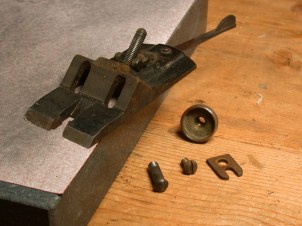
Lap frog face on edge of stone to protect yoke

On vintage planes, thoroughly clean all the threads of the screws and bolts to remove any crud or rust, and apply a little light oil before reassembly.  This is particularly important for the large brass adjustment knob, which needs to turn freely along the full length of its bolt.

On your block plane, the frog is not removable, so you only need to touch up the seat with a firm sanding block to ensure it is flat.  Since the flat sloped area behind the mouth on the plane’s base provides much of the forward support for the iron, it needs to be flat too.  Unfortunately, it’s hard to get to, and since you don’t want to enlarge the mouth at all, just a touch using a small piece of angled wood with fine sandpaper wrapped around it is about as far as you want to take it.  Thankfully, this is all that is usually needed to remove old crud. A Dremel or quality flexible shaft tool with a wire wheel brush will also work if the problem is limited to dirt and light corrosion.  Finally, as on the bench plane, clean the threads on all the hardware and add a little light oil to help retard moisture and rust.

Step 3 – Chip Breakers, not Deal Breakers
On bench planes, the chip breaker, more accurately referred to as the Cap Iron, serves three important purposes.  1. It adds rigidity to the iron (blade). 2. It provides a small opening through which the depth adjustment mechanism engages the iron.  3. It helps ‘break’ the shavings as they rise off the cutting edge of the iron, thus preventing them from jamming up the throat of the plane.

Most cap irons, even on new planes, benefit from a little tuning to make them more efficient.  The leading contact edge, where it rests upon the edge of the iron, needs to be completely flat so that no light (or shavings) can pass between the two.  This is a simple matter of a couple of passes on a sharpening stone.  I use my 1000 grit stone as anything higher is overkill.  If you don’t have one, use whatever comparable sharpening media you have available.  Ideally, you should undercut it slightly, so just the front edge makes initial contact.  As you tighten the cap iron against the iron, it will flatten out some.  The idea is to make it completely flush so that fine shavings do not slip in between the cap iron and iron.

Cap iron with polished arch

The other tuning point on the cap iron is its forward arch.  For lowered resistance and smooth chip passage, this arch should be polished.  You can do this by hand using your sharpening stone or sandpaper.  Again, 1000 grit or thereabouts is enough.  Smoother is better, and there’s no downside to over-polishing other than the time it takes.  Once complete, you may need to remove any burr that has formed along the front edge.  I run mine edgewise (like cutting with a knife) down a piece of scrap wood.

Note that block planes do not have cap irons.

Step 4 – Pop a Lever Cap on that Sucka
While appearances and designs vary greatly, all planes have some sort of lever cap.  The lever cap provides the tension that holds the iron in place.  There’s not really a whole lot that needs to be done to the lever cap.  Just ensure that the contact edge on its back side is reasonably flat, so it makes flush contact with the cap iron on which it sits.  Wood shavings will find their way through the tiniest of gaps.  If you’re obsessive, you can polish the forward arch a little just as you did with the cap iron.  You might also add a drop of oil to the working joints to ensure smooth operation.
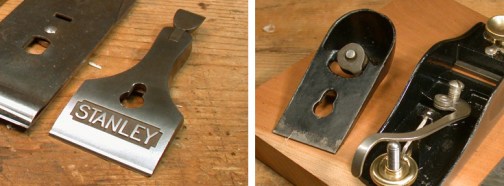
Bench plane and block plane lever caps

On block planes, since there is no cap iron, the lever cap plays a more important role.  Take a fine file to the back side and remove any rough spots, giving close attention to the leading contact edge.  This is most important on block planes with cast iron hooded style lever caps, such as the old Stanley 9-1/2.  The back sides of these caps are notoriously rough and unfortunately japanned. You don’t need to remove all the japanning, but you do want to get a smooth line of contact down front where it touches the iron.  File it smooth and give it a couple of swipes across your 1000 grit stone.  I like to touch up the top front edge as well, but this isn’t critical.

Step 5 – I Pity the Fool Who Don’t Sharpen His Tool!
The simply fact is, even with brand new planes, the irons require final honing before use.  This is not due to some lack of attention on the part of manufacturers.  Irons are provided this way on purpose, since the manufacturer has no way of knowing what you will be using the plane for, and subsequently how the iron would need to be honed.  If you do nothing else in the way of tuning your plane, at least take the time to properly sharpen it.  Do not skip this step!  Sharpen the iron.  Again, sharpen the iron!  Sharpen it!

Basic sharpening setup using a waterstone

Since sharpening is such an expansive topic in and of itself, I will leave the specific details for other posts.  What you need to know in the context of tuning, however, is that any plane, new or old, requires initial sharpening and honing.  At a minimum, new plane irons need to have their un-beveled side honed flat and polished to at least 4000 grit and preferably 8000 grit.  You don’t need to fuss with the entire surface; just the first 1/8” to 1/4” along the cutting edge will do.  You also need to put a final honing on the bevel edge itself.  It may look sharp, but it needs to be honed, again, to at least 8000 grit.  The goal is to get your cutting edge to as close as possible to a zero degree radius.

Sharpening is too often the deal breaker that dissuades woodworkers from trying hand tools.  This in unfortunate, for it requires little monetary investment to get started, is not particularly difficult to learn, and can be accomplished rather quickly with surprisingly good results.  For detailed information on sharpening, I recommend investing in one of the outstanding books on the subject by Ron Hock or Leonard Lee.   Chris Schwarz has also written a number of fantastic articles on sharpening plane irons. Sharpen the iron.  Again, sharpen the iron!  Sharpen it!

Step 6 – Final Adjustments
Now that you’ve finished tuning and sharpening your plane, it’s time to put it all back together and adjust it for use.  Hopefully, you have a better understanding of what each part does and how they all function together.  This will make adjusting it for use, and while in use, more intuitive and fluid.

A few points of consideration…

While the frog’s position on bench planes is adjustable, meaning you can shift if forward to decrease the size of the mouth opening or backward to increase the size of the opening, it needs to be firmly attached in whatever position you decide so that it doesn’t move when in use.  In other words, to adjust its position, you will have to loosen the screws that attach it to the base.  Without getting into detail, use a larger mouth opening for thicker cuts, and a smaller mouth opening for fine shavings.  Set the position of the frog where you want it and screw it down tight, understanding you may need to do this a couple of times before you get to just the right position.

The cap iron should be firmly screwed to the iron, leaving just a tiny edge of the iron protruding forward.  This should generally be as small as possible – 1/64” for fine shavings to 1/16” or more for heavier cuts, depending on the amount of camber on the iron. The iron/cap iron in place, the lever cap bolt should be tightened just enough to hold the iron firmly so it doesn’t slip in use, but not so tight that you can’t adjust it’s depth of cut using the large brass or steel wheel at the rear of the frog.  If that knob won’t turn, the bolt holding the lever cap is too tight.  This too, may take a couple of tries before you get the feel of it.

Holding the plane upside down, and looking down the sole at a low angle, lower the iron until it just begins to appear through the mouth – just a whisper.  Note that it’s not unusual for there to be quite a bit of slop in the wheel that lowers and raises the iron, as much as ½ to ¾ of a turn.  Just turn it until you begin to feel resistance.  Make any lateral adjustments necessary using the lateral adjustment lever that extends from the top of the frog.  Turn it upright and make a test pass on a piece of scrap wood.  If the plane digs in, back off the depth just a bit.  If it misses entirely, lower the iron a little.  You will quickly get a feel for when it’s ‘right,’ as evidenced by the rewarding ‘thwack’ sound a plane makes when it cuts a perfect curl.

On block planes, adjustments for use are a simple matter of properly tensioning the lever cap and setting the throat opening via the front adjustment plate (if the plane has one).  The same principles apply that you use in adjusting your bench planes.

Tuning a hand plane is not a difficult endeavor.  Once practiced, the whole process can be accomplished in about a half hour, even less depending on the tool.  Rather than view it as an unpleasant chore, I actually enjoy it, especially later in the evening when the dust has settled and the world is quiet.  Pour yourself a measure of Kentucky’s best brown, put on your music of choice, and saddle up to your work bench.

Stanley no. 5 Jack Plane, c. 1940s

***

Tools shown in the photos were returned to functional condition by Virginia Toolworks using museum quality archival preservation techniques.  Sharpened and tuned for use, every tool is fully tested and adjusted until perfect.

Stanley No. 7 Reflects Secret History

Some months back I purchased a particularly beautiful old Stanley no. 7 jointer plane dating from the late 1880s with the intention of reselling it. It was sharp, clean from decades of proper care, and looked like it was still being used a week ago – absolutely amazing condition for its age. The original owner’s initials were neatly stamped on one side and it came from his family’s estate, which was sadly being liquidated. The plane was remarkably perfect by all accounts – except one…

At some point, almost certainly early in its life, the plane was dropped, breaking off the top quarter of the frog. In a classic reflection of those parsimonious times and testament to the care the owner gave to his tools, he went to unusual lengths to repair that frog, fabricating a perfectly fitting replacement section out of brass, secured with handmade copper rivets. Normally I shy away from tools with such repairs, but the complexity and care given to this one fascinated me. It was extremely well executed, having no doubt taken the better part of a day (perhaps even two) to complete, with an aesthetic effect that was detectable only upon close inspection. More important, it also returned the plane to perfect working order.

I was so conflicted I let the plane sit in my shop for weeks as I tried to decide what to do with it. Obviously treasured by its original owner, whether through necessity or nostalgia, it was used and handed down within his family for numerous generations. I hated to think of it being sold for scrap or parts after 130 years, especially given its impeccable working condition. Eventually reason and practicality prevailed, and I reluctantly decided to just list it at a fixed price on eBay, hoping I would find a buyer who could appreciate it as it was. And find a buyer I did… one with a surprising affinity for this particular plane.

Turns out the guy who bought it already had at least one other plane from the same estate with the same owner’s initials stamped on the side. He wrote and told me he was so intrigued at the care the owner had given his tools, he felt compelled to own this no. 7 just for the repair it featured. For him, the repair reflected the respect and value afforded the tool, and that little bit of history made it all the more desirable. He was excited to get it and I was thrilled to have found it a home with a new owner who ‘gets it’ – who appreciates that tool for the secret history it carries in an exceptionally well executed repair. You have to love that!

Two Block Planes Everyone Should Own

I have a weakness for block planes.  They are the two seater sports cars of the hand plane world – quick, nimble, and fun to handle.  Heck, from the classic lines of Stanley Excelsiors 130 years ago to the high performance Veritas planes of today, they even look fast.  (Both shown below)

I have a sizeable collection of block planes that includes some of the rarest and most beautiful ever made.  Those, of course, are now relegated to display, as their value precludes risking damage in use.  But the vast majority in my collection are sharp and ready to use, and I do exercise each of them periodically when I’m working on a project.  This helps keep them in working order, and it just makes me feel good.

Still, over time I’ve found myself unconsciously reaching for the same couple of planes whenever the need arises.  If I were forced to reduce my toolbox to just two block planes, these are the two I would keep:

The Stanley No. 18 Standard Angle
The Stanley No. 60 Low Angle

Stanley no. 18, c. 1913-19

The Stanley No. 18 Standard Angle
This is my go-to block plane for everyday use, the one I always seem to grab first.  Mine is a very pristine WWI era model that I’m pretty sure I’ve used more than anyone else in its history.  Although it’s almost 100 years old, it looks like it could have been manufactured last year.  Both the japanning and nickel plating are pushing 100%, and so I baby it.

The Stanley no. 18 is a standard angle plane, meaning the iron is seated on a 20 degree bed.  With a bevel angle sharpened at the standard 25 degrees, you have a cutting angle of 45 degrees, same as a bench plane.  It also has an adjustable throat plate, an essential feature in a block plane.  The no. 18 is 6 inches long and fits my hand better than its longer, otherwise identical 7 inch brother, the no. 19.  And unlike the more popular Stanley no. 9-1/2, it feels more like an extension of my hand.

The no. 9-1/2 plane predates the no. 18 by about 15 years, was in production longer, and was the best selling block plane Stanley ever made.  It’s still made today, in fact, although the current design features a completely different mechanism from the original.  Admittedly, the no. 9-1/2 was the more popular of the two.  I truly don’t know why, though, since the design of the no. 18’s knuckle cap was far superior to the hooded lever cap on the no. 9-1/2, and it’s also more comfortable to hold in the hand.  I also find that the hooded cap on the no. 9-1/2 is more prone to slip around a little in use.  Not so with the no. 18.

Ironically they are both basically the same plane with two different styles of lever caps.  Other than the lever cap and its mounting bolt, all the other parts are interchangeable. Stanley charged a little more for the no. 18 and marketed it as virtually indestructible.  This of course was not true, for while the steel cap is arguably more durable, the bodies of both were cast iron and therefore susceptible to breaking if dropped.

I have several vintages of both models in my collection, but find the no. 18 with the knuckle cap superior in both function and comfort.  I use this more often than any other block plane I own.

Stanley no. 60, c. 1910

The Stanley No. 60 Low Angle
The Stanley no. 60 (and the identical japanned version 60-1/2) is a low angle plane, meaning the iron is seated on a 12 degree bed.  Sharpened at 25 degrees, you have a cutting angle of 37 degrees.  The primary advantage of the lower angle of attack is that it excels at shaving end grain.

Like the no. 18, the 60 series of planes are approximately 6 inches long.  However, the 60 series are narrower with an iron width of 1-3/8 inches, vs the 1-5/8 inch irons on the standard angle planes, and the 60 series featured a narrower version of the hooded lever cap used on the no. 9-1/2.  The 60 series planes also have adjustable throat plates.

As with the standard angle planes, Stanley made another low angle plane that was more popular than the No. 60.  The no. 65, which was wider and longer, is even today considered by many to be the ‘Cadillac’ of Stanley block planes.  I have a couple of no. 65s, which I use occasionally, but I prefer the no. 60 for its smaller size.  The size of the no. 65 makes it feel a little awkward to me for most projects, although it excels on wider boards and edges where the no. 60 is too small.

Most people are familiar with the knuckle jointed lever cap on the no. 65, the very same cap used on the nos. 18 and 19 standard angle planes.  It’s interesting to note that the no. 65 was originally made with the hooded style cap until about 1917 when Stanley switched to the knuckle jointed steel cap.  I’ve never quite understood why the no. 65 is so highly regarded.  Being 7 inches long, I find it a little too big in the hand.  The no. 60 series planes are smaller and much easier to handle, and ironically, I never found their hooded cap to be problematic as I do with the no. 9-1/2.  So, maybe it’s just me.

Ultimately, that’s the point.  I had to try all of the various models and sizes until I found what I liked best.  On all of these block planes, the iron is seated bevel up, whereas on bench planes the bevel is usually down.  There is a tremendous advantage with bevel up irons in that the angle of the bevel can be changed to affect a change in the angle of cut.  While there is more to consider in edge geometry than just the angle of cut (ex. durability), you could reasonably sharpen the bevel on a low angle plane iron to 33 degrees and end up with an angle of cut of 45 degrees (12+33=45), the same as on a standard angle plane.  However, to accomplish a low angle of cut using a standard angle plane, you’d have to sharpen the bevel at a very shallow 17 degrees (20+17=37).  Durability of such a thin cutting edge would be problematic with most woods.

For this reason, along with a few others, many people consider the low angle plane to be the more versatile of the two.  I tend to agree.  While I use my standard angle plane more often, if I could only have one block plane, it would have to be a low angle.  Fortunately, despite what my wife says, that’s not the case.

The no. 18 and no. 60 are my two primary go-to block planes when I’m working on a project.  I have most of the other Stanley sizes in my collection, and like I said, I’ll pick them up to use sometimes just for nostalgia, but the nos. 18 and 60 are my favorites. These are the two that I think everyone should own, but ultimately, you won’t know which you prefer until you try a few for yourself.

***

Vintage tools shown in the photos were returned to functional condition by Virginia Toolworks using museum quality archival preservation techniques.  Sharpened and tuned for use, every tool is fully tested and adjusted until perfect.

What to Look for When Buying Vintage Hand Planes

c. 1940s Stanley No. 5 Jack Plane

When I first started buying and collecting vintage hand planes, much of the available information I read online included ominous warnings about warped, twisted soles, unstable frogs, and mangled throats. Sounded more like a Stephen King movie than a discussion about tools! With recommendations for evaluation that involved engineering squares and feeler gauges. I was convinced that no vintage plane I purchased could ever possibly work correctly until I lapped the sole and re-machined every contact surface. It only took me suffering through flattening one or two planes to come to my senses and question just what the heck I was trying to accomplish.

Once I actually started sharpening, tuning, and using hand planes, I realized that most of these warnings were just a lot of unwarranted hooey. The vast majority of vintage planes I’ve owned and used over the years were actually just fine. Naturally, using a nice new Lie Nielsen or Veritas plane provides a noticeably different experience, but at a substantial cost premium. I’m just not there yet, and may never be. Here’s why…

The quality of the tool doesn’t contribute nearly as much to the end result as does the skill of the user. Craftsmen of 100 or so years ago made do just fine with the planes that were available. The average woodworker at the turn of the century didn’t own a micrometer or a machined straight edge. Many didn’t even use a measuring device, instead relying on dividers, marking gauges, and geometry. They used the tools and technology of the day, and produced some of the finest furniture in the world.

That’s not to say that tool quality isn’t important. Or more precisely, it’s not even so much the quality of the tool itself, but the quality of the tool’s tuning combined with proper technique that produces the desired result. As many others have pointed out before, a plane is really nothing more than a jig for holding a cutting implement at a consistent angle. With the appropriate ‘jig-o-metrics’ (tuning) applied, a properly sharpened cutting edge, and skillful application by the user, even the cheapest home center hand plane can competently get the job done. What quality of design, machining, and related workmanship gets you is ease of use and greater versatility. With tighter tolerances you get less slop and greater precision. While a high quality tool won’t improve the results of an unskilled user, it can certainly improve the results of one who has mastered its use.

All that said, there are some red flags to look for when shopping for hand planes, and with the abundance of vintage planes available on eBay, yard sales, and tool swaps across the country, there’s no reason to settle for a tool with serious problems. The challenge is knowing what is serious, and what isn’t. So let’s take it part by part. I’ll try to keep it simple.

Stanley No. 7, Lever Cap & Iron/Cap Iron

Body & Sole
Also sometimes referred to as the ‘base’ or ‘shoe,’ the body of the plane, as the name implies, is the main frame. The sole is the surface that comes in contact with the wood when using the plane. The main thing to look for on the body is cracks and/or repairs. Planes with this sort of damage are best avoided. Small chips along the top edges (cheeks) don’t affect usability, but are cosmetically undesirable. With so many planes available, why settle? The other thing to inspect on the body is the opening where the iron (blade) protrudes. It’s important that the opening, called the mouth or throat, isn’t chipped and hasn’t been repaired or enlarged through filing. The throat opening affects your ability to properly set the iron, and is one area of the plane where precision is extremely important.

Pitting is usually high on the list of problems to avoid. Again, with so many planes available, there’s no reason to settle for a tool with heavy pitting. Pitting is damage from rust that has eaten into the metal. In my experience, unless the pitting is very heavy, it doesn’t usually have much effect on a plane’s performance. Like all the normal scratches, scars, and dings from use that you’ll see, very light areas of pitting are not uncommon and are of little concern with regards to practical usability.

Some folks might disagree, but I don’t worry too much about the flatness of the sole. Having owned more than 250 vintage planes over the course of the time, I’ve only had a few that were unusable, and each of them had other issues more critical than the flatness of the bottom. Slap a ruler or straightedge against it if it makes you feel better or if you’re spending more than $75-$100 on a standard bench plane to use. However, if your need for critical tolerances is that great, I recommend you invest in a modern Lie-Nielsen or Veritas plane. They are machined to engineering grade tolerances, but you’ll pay a premium for them.

Knobs and Totes
The wooden knobs and totes (handle) on planes are frequently found with chips, cracks, and breaks. Aside from the obvious preference that they be perfect, minor damage is usually just cosmetic. Functionality is only compromised when the damage is so bad that they are unstable or inhibiting a proper grip on the plane. Breaks and cracks can often be repaired, even if the damage is severe, and replacements are abundant. If the tool is in otherwise good condition, a damaged or missing knob or tote isn’t a deal breaker for me. For more information check my post on repairing knobs and totes.

Stanley #7 Frog

Frog
The frog is the part of the plane that attaches to the top side of the base and provides an angled seat for the iron (blade), as well as a mechanism to adjust the depth and lateral positioning of the iron. I have no idea why it’s called a frog. Damage to look for is a missing lateral adjustment lever, which was a feature on the frogs of most Stanley (and other) bench planes manufactured after the mid 1880s. The lateral lever sticks up from the top of the frog and enables lateral (side to side) positioning of the iron. Every now and then this lever is missing. Ideally it should be straight and tight, although bends can be straightened and if it’s wobbly, it can be tightened by carefully tapping its rivet with a small ball peen hammer.

Broken and chipped frogs are the main concern and should be avoided. Look close at the bolt hole in the front center of the frog to make sure there are no chips around the edge. Once again, replacement frogs are fairly plentiful, but you will need to find one from the same period of manufacture to ensure proper fit since the design changed over the years.

Iron and Cap Iron
The iron, also referred to as the ‘cutter’ or ‘blade,’ is the tool’s cutting implement. The main things to look for are how much usable length remains and the condition of the surface metal. Pitted irons are not necessarily a lost cause (see my post on salvaging irons), but are problematic. Again, period irons are abundant, but if you’re buying the plane to use, you’ll want to invest in a modern replacement from somewhere like Hock, Lie-Nielsen, or Lee Valley Tools. They are far superior and will make a significant difference in the plane’s performance.

The cap iron, which is sometimes called the chipbreaker or double iron, attaches to the top of the iron and provides both stability and a raised surface to literally break the shaving as it’s cut from the wood. Other than very heavy pitting or a hack grinding job, I’ve rarely seen one of these that wasn’t usable.

Lever Cap
The lever cap sits on top of the iron/cap iron assembly and provides tension to hold them against the frog. Lever caps are sometimes found with chips along the bottom edge, either from having been dropped or used as a screwdriver to loosen the wide screw that attaches the iron and cap iron. While unsightly, a chip along the bottom edge doesn’t really affect its functionality. Again replacements are plentiful. Of greater concern is if it’s missing the tab lever at the top, which acts as a cam that locks the lever cap against the frog. It’s rare that this is missing, but the lever cap cannot function without it.

Frog Adjustment Hardware

Hardware
I’ve covered all the major functional parts, so all that remains is the miscellaneous hardware on the plane – screws, bolts, brass knob, etc. You will want to make sure all the parts are there in order for the plane to function, unless you’re willing to buy replacements on eBay. Since Stanley and others used a very unusual threading on their hardware, you won’t find replacements in your hardware store.

The knob and tote are attached to the plane with a bolt that is threaded on both ends, topped with a brass nut that is visible from the top. Models made during WWII may have single piece steel bolts.

The frog should have a bolt sticking out of the front of it that holds the iron/cap iron via the lever cap. The frog itself is attached to the base with two smaller bolts with washers. At the rear of the frog should be a large brass knob that is used to raise and lower the iron through the throat. It’s important that this knob turn freely across the full length of its bolt, although it’s not unusual to have to clean this area thoroughly before it will work as intended.

On Stanley bench planes made after 1907, there will be an adjustment bolt that engages a small plate attached to the bottom rear of the frog. This enables fine forward/backward adjustments to the frog, which has an effect similar to closing the throat of the plane for fine cuts. Since most bench planes did not have an adjustable throat as found on some of the better block planes, this frog adjustment allowed movement of the entire frog, which accomplished the same thing. Moving the frog back opens the throat for thicker cuts, while moving it forward closes the throat for very fine shavings. It’s actually pretty rare to find this feature permanently frozen due to rust and corrosion, but it’s something to look out for. While it may take a few days of soaking in penetrating oil, they almost always free up.

That’s pretty much it. Very few vintage hand planes are in perfect condition, so it’s important to have realistic expectations. Almost all show the effects of age and use. This is what gives them character. Perhaps most important for new buyers shopping for a first hand plane is to first understand how they function and how they are used. That will make evaluating condition much easier and the assessment more relevant. Additionally, all new hand plane purchasers need to understand that no tool they buy, whether 100 years old or manufactured yesterday, is going to function effectively without proper tuning. That discussion I will save for another post.

***

Tools shown in the photos were returned to functional condition by Virginia Toolworks using museum quality archival preservation techniques.  Sharpened and tuned for use, every tool is fully tested and adjusted until perfect.

Perfection is a Matter of Perspective

Antique_Chest_of_Drawers_Victorian_Flame_Mahogany_English-Dovetail_Joints-3466_-_4cEver look closely at a really fine piece of vintage furniture in a historic building or museum? The vast majority, if viewed at a low angle across their flat panels, have a very subtle but distinct scalloped surface finish. This, of course, was due to the final shave with a smoothing plane – one with a slightly cambered edge.

Since most of the furniture we purchase today is mass produced through automated, computerized processes, fit and finish usually appears precise, even if overall quality of construction and materials is lacking. As a result, many casual woodworkers are subconsciously conditioned to pursue machine-like perfection. I can personally attest to feeling frustrated and disappointed when my labor of love and endless hours of work failed to produce a result that achieved the level of precision I saw in store bought furniture. Convinced that my deficiencies were a direct result of the tools I was using, I invested in more and better quality tools and obsessed over my mastery of them. Woodworking became a matter of investment in tools and their mechanical proficiency.

Then, a few years ago, something happened that changed the way I view perfection and altered my entire approach to woodworking. It wasn’t so much a sudden epiphany, but there was definitely a short trip to ‘hang on, maybe I’ve been looking at this all wrong.’ Instead of using modern production furniture as a benchmark, I started climbing underneath and inside 18th, 19th and early 20th century furniture – the stuff that was made by hand using human-powered tools. In addition to educating myself on the design and construction, I started thinking about how the woodworker cut, shaped, finished, and assembled all the parts. Understanding that everything was made without the benefit of table saws, jointers, and router bits, I wondered what tools and techniques were employed a hundred or so years ago. And I noticed something else, too. The construction, while solid and cleverly engineered, was certainly not precise in the way I was used to seeing in modern furniture. The joints, cuts, and surfaces all very clearly reflected the working hand of man, not machine. And somehow, despite its imperfections, it was more appealing and more beautiful than almost anything I can purchase new today.

Once I came to understand just how classic period furniture was made, and started to recognize the beauty of the ‘fingerprints’ of the craftsman who made them, my entire mindset and perception toward woodworking changed. Perfection is a relative concept. The real beauty in a piece of handcrafted furniture is not in its machine-like precision, but rather in its reflection of the person who built it. Well executed technical prowess is undeniably impressive, but it’s the signature hallmarks of imperfection – of man working wood with his hands that give the piece character and life.

Condition – The Eye of the Seller

026 SB4-T19 ebay
When it comes to vintage tools, condition, like beauty, is in the eye of the beholder… or more specifically, the eye of the seller. So many online tool sellers throw around vague, undefined terms like ‘great condition’, ‘mint condition’ etc., it’s hard to get a good sense of exactly what you’re buying, especially on Ebay. I use such terms sparingly, and only as a complement to a much more specific description of condition and features. That’s why I write my listings using specific descriptives, not subjective adjectives.

Unless they were hermetically sealed soon after they were made, all vintage tools show some degree of age, whether through loss of finish, dents, dings, and scratches from use, transport, and storage, rust damage, or simply darkening from age and environment. It’s also healthy to keep in mind that relatively speaking, these were not precision made tools in the way we think of precision made tools today. Quality control was more subjective, and let’s face it, these were tools of tradesmen who carried them around in wooden boxes on horse drawn carriages. It’s a wonder any of them even survived! Customers of the day were not likely too concerned with cosmetics. They were not the disposable, ‘throw it away and buy a new one’ culture we are today. They used things until they were worn out, then they fixed them up as best they could, and used them some more.

For me, mint condition means brand new, unused, just as it was when it was sold. Anything less is near mint, very fine, fine, good, or user grade. For tools that are 50 to 150 years old to be in mint condition, they would have to not only have never been used, but kept in climate controlled storage so as not to sustain permanent rust or corrosion damage. I’ve seen very few tools that meet this criteria. Near mint to me means the tools was never used or used very lightly. It may well show some evidence of age, but overall looks like something akin to a floor sample. I think far less than 5% of vintage tools fall into this range. The vast majority of tools fall somewhere between Very Fine (maybe 5-10%), Fine (10%), Good and User (45%), and Poor (30%). All of these are, of course, very rough estimates based on my own observations and experience.

I guess the takeaway is, when you’re shopping for vintage tools, whether to use or display, ignore the subjective descriptors and adjectives such as ‘Good’ or ‘Mint’ or ‘Perfect.’ Don’t make assumptions about features, condition, or whether the tool is in working condition. Don’t be afraid to ask questions or request additional photos (if the tool is being sold online). And always be wary of tools that have been over-cleaned or ‘restored.’ To some, restored simply means sharpened. To others, it means completely refinished.

Stanley vs. Bailey – A Short History

Stanley Bailey with Box

A Stanley Bailey no. 2 plane – notice both names on the box

The question comes up now and then from folks investing in one of their first vintage planes… What’s the difference between Stanley planes, Bailey Planes, and Stanley Bailey planes? It’s confusing, because the terms are often used interchangeably. Worse, depending on the tool and the time, the terms may indeed be quite correctly used interchangeably, whereas with other tools and times they may not. It’s enough to make a new collector’s head spin! To make short work of figuring this all out, let’s start with Stanley.

The Stanley company itself originated from the consolidation of the rule business of A. Stanley & Co., founded by Frederick Stanley in 1843 in New Britain, Connecticut, and the level and plumb business of the Hall and Knapp Corporation. The newly formed Stanley Rule & Level Company, founded by Frederick’s cousin Henry Stanley in 1857. This stood until the company was purchased in 1920 by Stanley Works. Finally, in 1935 the company reorganized simply as Stanley Tool.

Leonard Bailey was a designer and plane maker who patented several designs for hand planes in the mid 1800s. In 1869, Stanley Rule & Level bought seven patent rights to Leonard Bailey’s designs. While their relationship with Mr. Bailey only lasted until 1875, Stanley retained those patent rights and eventually the use of the Bailey name.

After the relationship between Stanley Rule & Level and Leonard Bailey fell apart in 1875, they ended up in court over a patent infringement dispute (which Stanley eventually won) over the designs of Stanley employee Justus Traut. Bailey went to work for Selden Bailey’s (no relation) Bailey Tool Company and in 1878 moved from Hartford, Connecticut to Woonsocket, Rhode Island to oversee the manufacture of their Defiance and Leonard’s own Victor line of planes. Both of these lines struggled and Stanley ended up buying both in 1880 and 1884 respectively, but then discontinued them by 1888. Leonard Bailey thus retired from plane making but continued his copying press company, (Bailey Manufacturing Company), moving his factory to Wethersfield, Connecticut with a sales office in New York City until his death in 1905. In an apparent nod to his contribution to their overwhelming success, or perhaps for branding reasons, Stanley started casting the Bailey name into the beds of their plane bodies around 1906.

Regardless of which name is stamped on them, virtually every bench and block plane Stanley made from 1869 forward are all referred to (somewhat generically) as ‘Stanley Bailey’, or simply ‘Stanley’ or ‘Bailey’ – all are technically correct. The Bailey planes comprised Stanley’s basic bench plane line and the company made millions of them. Some (years of manufacture) had the Bailey name stamped into the bed, while others did not. All, however, refer to the various design patents originated by Leonard Bailey, as ‘Bailey’ was never actually part of the Stanley company name.

As the patent rights expired late in the 20th century and hand tools began falling out of favor, the Bailey name was eventually dropped from use. The designs and patents of Leonard Bailey, Justus Traut, and others, however, still live on in many of the hand planes available on the market today. Lie-Nielsen, perhaps most notably, manufactures a very high quality line of planes based specifically on Stanley’s premium line of Bedrock planes.

So, to answer the question… all Stanley Baileys can appropriately be referred to simply as Stanleys, as can many Bailey planes as well – the terms are frequently used interchangeably. Just remember that not all Baileys were Stanleys. It depends on the model and when they were made. The early non-Stanley Bailey planes tend to be more rare and quite valuable.

For more information on the entire detailed history, try John Walter’s book, Antique & Collectible Stanley Planes, Roger Smith’s, Patented Transitional and Metallic Planes in America 1827 – 1927, or Alvin Sellen’s, The Stanley Plane.

Who’s Your Sweetheart?

2nd Sweetheart Logo (c. 1921-22)

Search for “Stanley Sweetheart Plane” on eBay and you’re likely to get some very confusing results.  Some are old, some are new, others fall somewhere in between.  But not all are actually Sweethearts, and not all Sweethearts are the same.  Just what is a Sweetheart, you ask?

Originally used from 1920 to 1935, the “S.W.” inside the heart trademark stamp stands for The Stanley Works, and “STANLEY”, obviously stands for the rule and level firm. The two companies share lineage.  The heart-shape is a memorial to The Stanley Works long-time president, William Hart (1884-1915).

The first version of the logo had “NEW BRITAIN,” “CONN. U.S.A.” in two lines under the heart, and dates from around 1920. The next version (shown in the photo), dating from 1921-1922, just had “MADE IN U.S.A” below the heart in one line. The final logo, dating from 1923-1932, is similar to the second, but the top of the heart drops inline with the bottom of the notched rectangle.  These trademark logos are collectively known as the “sweetheart” logos in the tool collecting world.  In the original type studies assigned to mark Stanley’s bench plane evolution, these three variations were used across Types 12 through 15.

Sweetheart era tools are usually more desirable today because most people consider the types 10 though 15 (1910-1932), which includes the Sweetheart years, to be the pinnacle of Stanley’s plane production quality.  Certainly, the slow decline of all bench tools began around WWII and after, as modern industrialization took hold and power tools became the standard.  By the time Stanley started using blue japanning in 1960, the entire hand tool industry was in its final throws.

To the Sweetheart of today…

In a brilliant marketing move, Stanley recently introduced its new line of premium “Sweetheart” planes (and chisels), capitalizing on the past glory of its name combined with the brand equity associated with the Sweetheart era of old.  I don’t own one, and probably won’t, so I can’t speak to their quality first hand.  I have, however, read enough detailed reviews from the industry’s most reputable folks to at least be able to summarize their state.  Evidently, while far better than the shrink wrapped home improvement center variety tools, and arguably better than the stuff coming out of Europe, India, and Asia, they are still inferior to vintage Stanley of the 1910s through 30s, and are nowhere near the class of the modern Lie-Nielsens or Lee Valley’s Veritas lines, both of which are exceptional, even if quite a bit more expensive.

With a fair bit of tuning, I’m sure the new Sweethearts are fine for casual users, but for my money, I’m sticking with vintage models for general use, and splurge on Lie-Nielsen or Lee Valley models when precision is worth the investment.

Salvaging Pitted Plane Irons

There’s no question that modern irons are far superior to the vintage irons that you find in virtually all old planes.  Unless you’re a casual   woodworker who only uses your plane(s) a few times a year, the investment in a new A2 or O1 steel iron (from companies like Hock, Veritas, or Lie Nielsen) will provide far superior performance.  These irons are thicker, flatter, and hold an edge better than the old tool steel irons.  That said, woodworkers 100 years ago did just fine with what they had, and many woodworkers today are also collectors and prefer to use their vintage tools in the same manner and with the same limitations as their ancestors.  Regardless of what camp you fall into, at some point, you’re going to come across a plane iron that is pitted.  It is inevitable and unavoidable.

Conventional wisdom and learned advice tells you to pass on irons that are pitted from rust damage.  True, there are plenty of vintage irons out in the market that are undamaged or in at least serviceable condition.  Many people, in fact, throw away or sell for scrap old damaged irons in lots on Ebay, and with good reason.

The problem is, of course, that pitting on the non-beveled (flat) side of the iron often prevents you from polishing it flat and smooth.  Pits that reach the cutting edge create tiny irregularities that subsequently reveal themselves in the shaved surface of your wood.  By contrast, pitting on the beveled side of the iron is of little consequence since it never actually touches the wood.  It might look bad, but it doesn’t affect the iron’s performance.  The only part of the iron that matters is the cutting edge, and both the bevel and flat side of that edge must be properly dressed – sharpened and honed to cut clean.

So what to do with irons that are badly pitted?  If the pitting is limited to the un-beveled side, all you might need do is flip it over, reversing the bevel direction.  Note that you’ll lose about a quarter inch of iron length making this reversal.  And if both sides of the iron are pitted, there is little point.  A better, and simpler solution, is to adjust your cutting angles slightly, adding a slight back bevel to the polished (un-beveled) side – enough to remove the pits and reach clean metal.

Using a standard bench plane as an example, the iron is seated on the frog at a 45 degree angle.  Most woodworkers sharpen the iron with an angle somewhere in the 25 to 35 degree range.  By putting a back bevel of a couple of degrees on the pitted back side, you effectively cut through the pitted surface creating a clean, undamaged edge.  Adjusting your primary bevel angle to compensate (if desired), you end up with a cutting angle of about 46 to 50 degrees – not a critical difference for many woodworkers.  In fact, increasing this angle of attack is advantageous when planning wood with difficult grain. [1]

Now, if you’re obsessive about your edge geometry and angle of cut, this might not be a satisfactory solution.  Although if that’s the case, you probably shouldn’t be futzing with a vintage plane in the first place, let alone salvaging a pitted plane iron.  But if you’re like me, having one or two extra irons set up for different purposes is a must, and finding good use for old irons suffering from age and neglect makes me feel good.  It’s just a matter of purposing them for the right job.

____________________________________

[1] Hock, Ron, Back Bevels and Plane Geometry, 2010.