Setting Up a Stanley Gage Plane

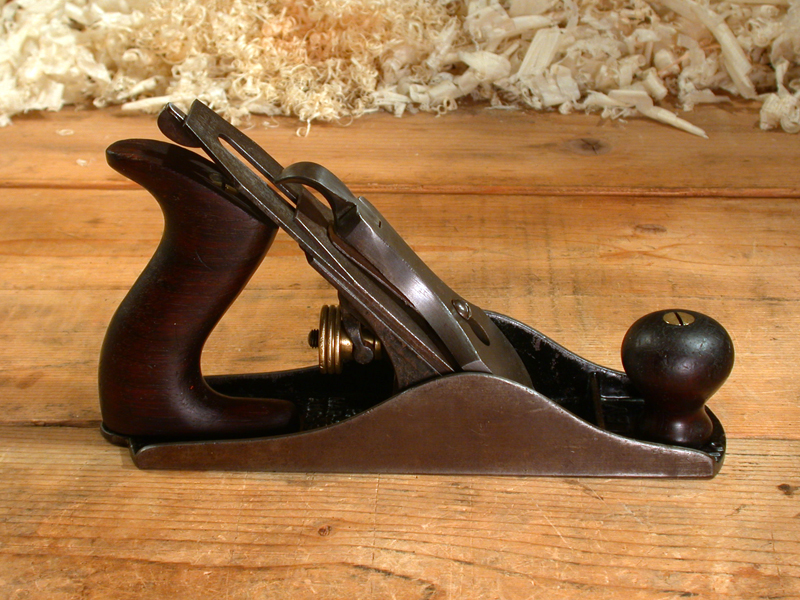
Stanley Gage Plane - Frog and Iron Assembly

Stanley Gage Plane – Frog and Iron Assembly

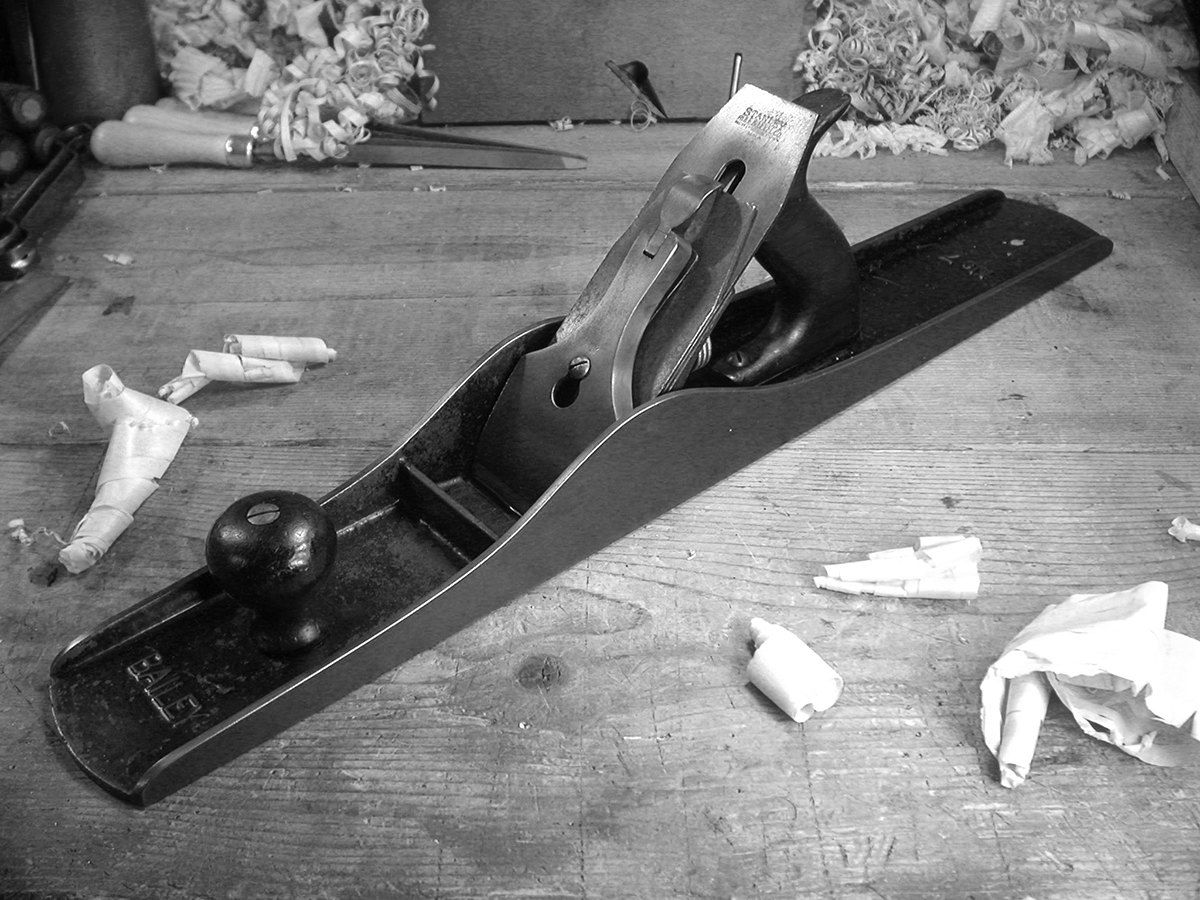
Stanley Gage planes are a little finicky to set up initially, but once you get them set accurately, they do tend to stay that way.  The main benefit of the design is such that once properly set, you can remove the lever cap, iron and cap iron, and then replace them again, returning to the exact depth adjustment at which you had it set initially.  Further, since the iron/cap iron is positioned via an indexing block, there is no slop (movement) from side to side, and therefore no need for a lateral adjustment mechanism.

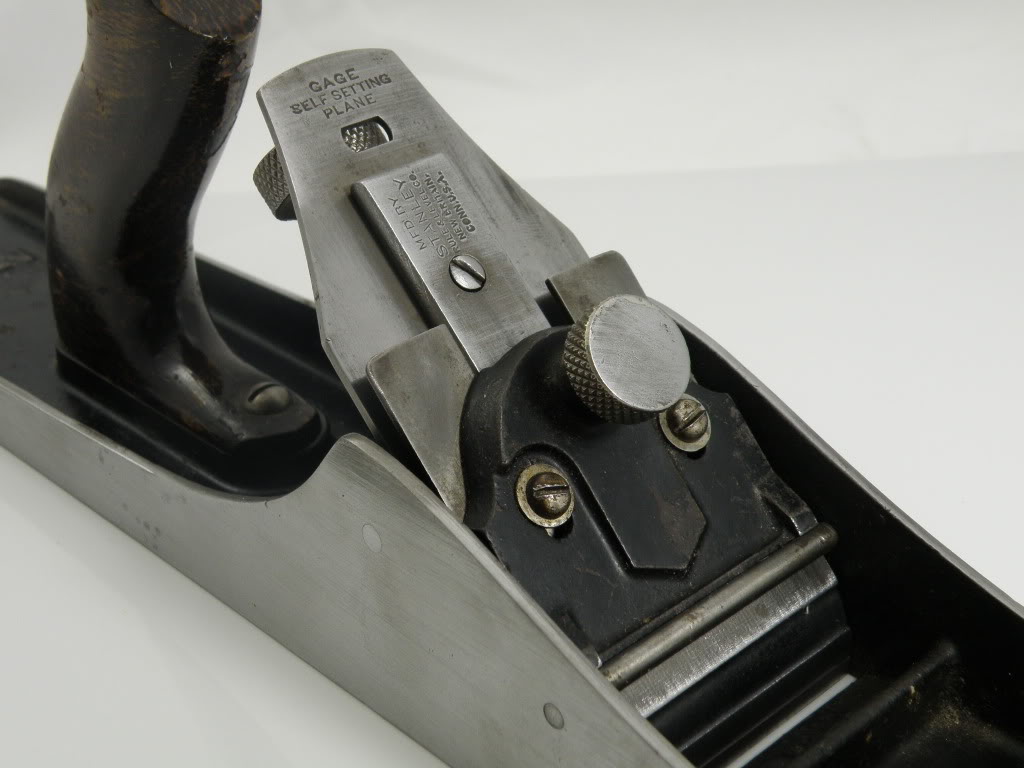
Indexing Block on Gage Iron

Indexing Block on Gage Iron

Some people will tell you that in order for the design to work, the cutting edge of the iron must be perfectly perpendicular to its edges.  Ideally, that is true.  However, I don’t think it’s actually all that critical.  What does need to be perpendicular to the cutting edge is the sides of the indexing block, which can be loosened and adjusted via the screw on the top side of the iron (show here on the left).

The indexing guide itself, which is attached to the lever cap, is not laterally adjustable, so in order for the iron to extend properly through the mouth of the plane, the iron’s edge needs to be perfectly aligned.  As I said, you ideally want everything to be at perfect right angles, but that’s not always what you end up with. By adjusting the indexing block so that it’s properly aligned in conjunction with the cutting edge on the iron, even a skewed edge can be aligned properly.

I admittedly don’t have a lot of extensive personal hands-on experience with the Gage planes.  I’ve owned a couple, and right or wrong, here’s how I set them up for use:

  1. Remove the lever cap and set it aside.
  2. Loosen (slightly) the indexing block that’s attached to the iron, just enough so it moves independently against the iron.
  3. Put the iron in place (seating the indexing block to engage the depth adjustment).
  4. Align the iron with the mouth opening, and carefully tighten the screw on top of the indexing block.
  5. Put the lever cap in place and tighten it.  You should be good to go.

***

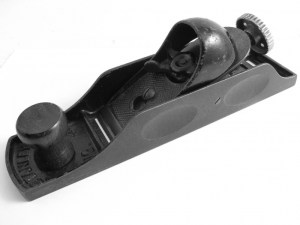
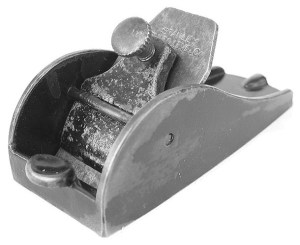
Tool Profile – Stanley nos. 61 & 63 Low Angle Block Planes

Stanley nos. 61 & 63 ~ from the Virginia Toolworks collection

Stanley nos. 61 & 63 ~ from the Virginia Toolworks collection

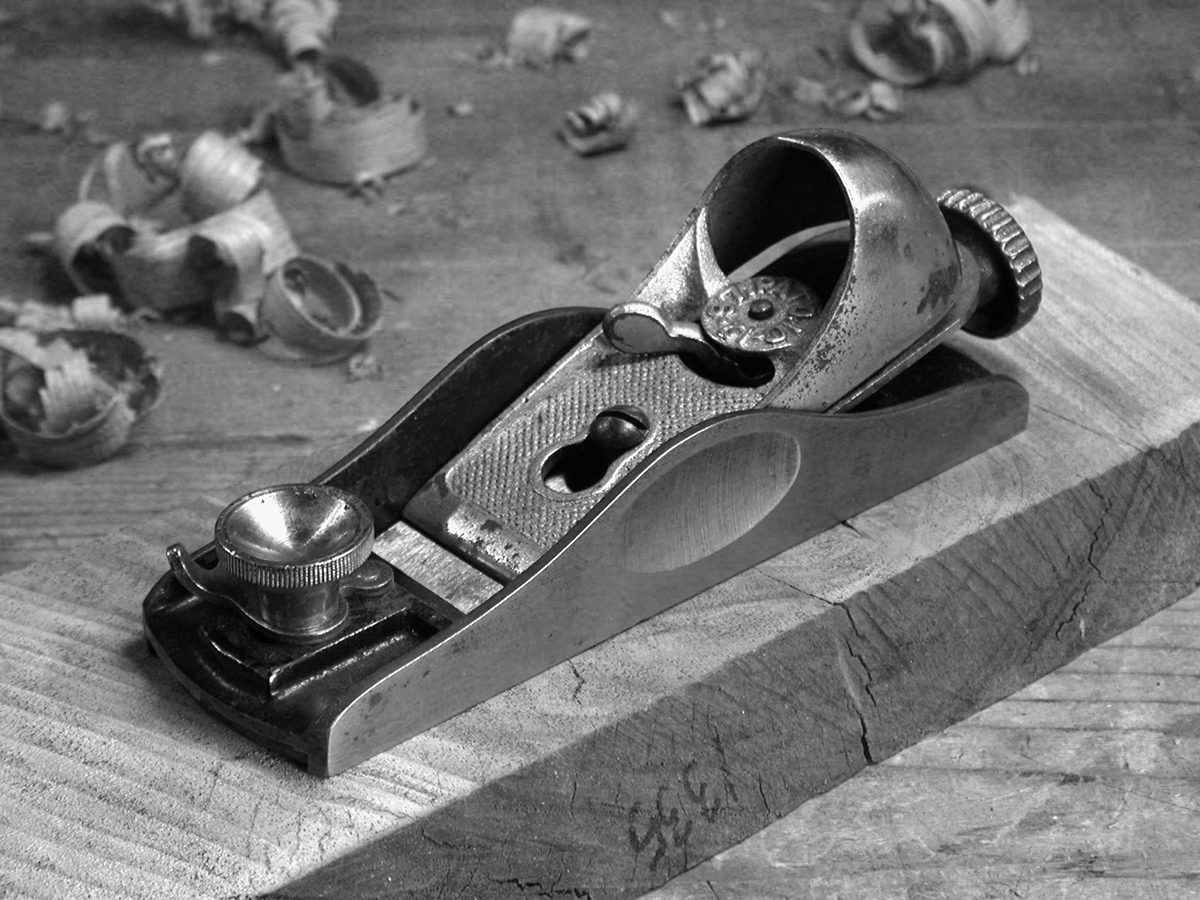
The Stanley no. 61 and no. 63 planes are low angle block planes featuring depth adjustment mechanisms but lacking an adjustable throat plate.  Introduced in 1914 and 1911 respectively, neither the 6 inch no. 61 nor the 7 inch no. 63, were ever particularly popular with tradesmen, woodworkers, or carpenters.  Offered as less expensive, fixed throat alternatives to the no. 60 and no. 65, very few folks were tempted to purchase a low angle plane without an adjustable throat, especially when that feature could be had for just a few pennies more. Subsequently, their limited popularity constricted demand and production, and so they are fairly hard to find today.

Ironically, these planes are virtually identical to the very first type no. 60 and no. 65, both of which were introduced in 1898 with a similar wooden knob and lacking an adjustable throat.  Why then, less than 10 years later, Stanley thought reintroducing this handicapped design under the model nos. 61 and 63 was a good idea is anyone’s guess. Regardless, both the no. 61 and no. 63 are easily distinguished from the Type 1 no. 60 and 65 since their model numbers were cast in relief at the rear of the bed just below the depth adjustment knob.  Manufactured for less than 25 years, both planes were discontinued in 1935.

While the no. 61 and no. 63 are very collectible due to their scarcity, users looking for a functional low angle block are far better off sourcing a no. 60 or 65 in good condition.

***

Stanley Gage Planes – History and Type Study

John Porcius Gage formed the Gage Tool Co. in 1883, and operated it until 1917, making wood bottom transitional planes. J.P. Gage registered plane patents on 4 August 1885, 13 April 1886 and 8 November 1892. The 30 January 1883 patent of David A. Ridges was also used.

US339872-Gage-Patent

J. P. Gage Patent Drawing

The Gage “self-setting” design eliminated the need for a lateral adjustment feature, which eliminated slop in the blade movement. The adjustment slide was designed to accurately fit into a groove in the frog, and depth adjustment was controlled by a screw at the rear of the frog, similar to a low angle block plane. The two-piece lever cap design also functioned as a chipbreaker. The outer part of the cap serves as the lever cap, with the inner piece functioning as a chipbreaker. The mechanism is adjustable via a two-screw slide to bring it closer to the edge of the blade. The self setting feature allowed the cutter and cap to be removed and reinstalled without adjustment of the cut.

In 1919 Stanley Rule & Level Co. bought the Vineland NJ company, mainly to get the patent for their excellent frog design and to compete with Sargent’s Auto-Set line of planes that are very similar in both appearance and design. Stanley retained the use of the Gage name, producing a line of transitional planes from 1919 to 1935, and metal Gage planes from 1919 to about 1941, when the line was phased out.

The original Stanley Gage line of metal bench planes was numbered 3 through 7, sizes that compared to their Bailey counterparts. The G prefix was added in 1930 to distinguish them from the Bailey line (G3 through G7C). There were 10 different numbers included in the offering, which included corrugated versions that, like Bailey planes, were differentiated with a C suffix appended to the model number (ex. G3C or G7C).

Gage Plane

Stanley Gage no. 5, Type 2 (1924-1930)

Gage Type Study

There are four “Types” of Stanley Gage planes, which are thankfully far less complicated than most of the other Stanley Type studies.

Type 1 (1919-1923) – Plane beds marked “Pat. Appl’d For” in the casting. No “G” prefix to the model number

Type 2 (1924-1930) – “Pat. Appl’d For” removed from the casting. Plane beds are now marked with Schade’s 2-17-20 patent date.

Type 3 (1930-1941) – The “G” prefix added to the model number.

Type 4 – Same as Type 3 but has “Made in USA” added to the casting. (exact date of this is uncertain)


Sellens, Alvin, The Stanley Plane,: A History & Descriptive Inventory, Augusta, KS: Allvin Sellens, 1978.

Walter, John, Stanley Tools: Guide to Identity & Value, Marietta, OH: John Walter, 1996.

***

The 5 Hand Planes Everyone Should Own

Unless you live in a city apartment, or happen to be wealthy, disinterested, or lazy enough to pay someone to do all of your home maintenance projects, chances are now and then you have need of a hand plane.  Even the most ardent power tool minded woodworker can’t escape the reality that some jobs are just easier solved by a couple of passes with a hand plane than with anything you plug into an electrical outlet.   Whether you’re an active hand tool user, a neophyte learning to work wood by hand, a weekend woodworker or a casual homeowner, a basic set of good hand planes is essential.

There’s a great deal of generalization that goes into compiling a list like this.  Because hand planes tend to be used for specific applications, some woodworkers my find greater utility in some planes than others.  Someone who makes musical instruments would obviously need different tools than a furniture maker.  But speaking in the broadest sense, these are the 5 essential hand planes that virtually everyone should own.  Certainly for anyone interested in acquiring a first set of planes to use around the shop, farm, or house in the suburbs, these tools offer the greatest utility and versatility.

1. Fore Plane – The Stanley No. 5

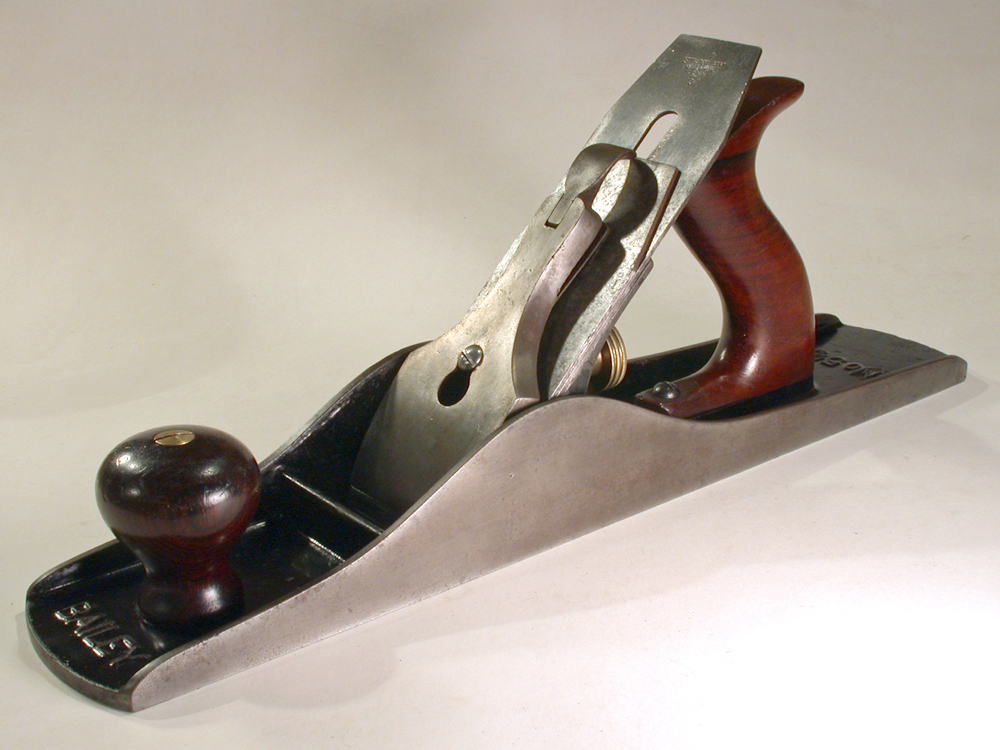
Stanley Bailey No. 5, Type 11 (c. 1910-18)

Stanley Bailey No. 5, Type 11 (c. 1910-18)

Fore planes are those ranging from approximately 14 inches to 18 inches in length. In the Stanley bench plane assortment, these include the nos. 5, 5-1/4, 5-1/2, and 6. The term ‘Fore’ dates back several hundred years and is generally assumed to be a contraction of ‘Before’ and interpreted as the plane used first in flattening a surface. “It is called the Fore Plane because it is used before you come to work either with the Smooth Plane, or with the Joynter.” [1]

As the first plane one would use in preparing a surface, the Fore plane takes the most aggressive cut, removing rough saw marks and leveling out low and high spots, etc. The iron is sharpened with a significant camber, or curvature to the cutting edge, with as much as 1/16″ to 1/8″ difference between the center and the edges. This removes the most waste, but subsequently leaves the surface of the wood with a scalloped finish.

While either the Stanley no. 5 or no. 6 will do, the no. 5 is the better choice in our 5 plane roundup. Rough planing is a very physical activity, and the lighter weight of the no. 5 makes it less fatiguing to use. It’s smaller size also makes it more appropriate for the wide variety of other day to day planing jobs that most people likely face. The no. 5 is, in my opinion, the most versatile of all the bench planes and the plane I use most often.

2. Try (or Jointer) Plane – The Stanley No. 7

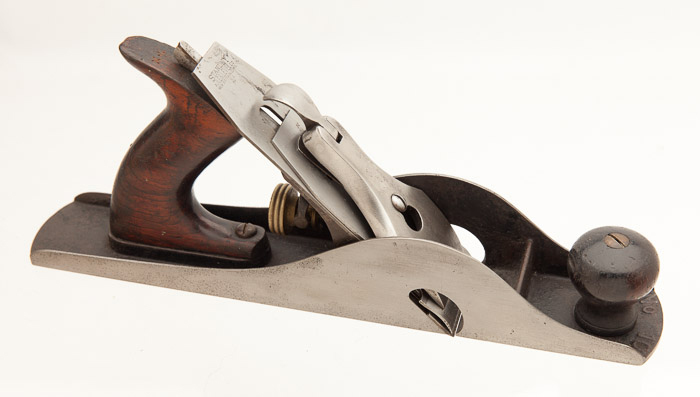
Stanley Bailey No. 7, Type 10 (c. 1907-09)

Stanley Bailey No. 7, Type 10 (c. 1907-09)

Try planes, more commonly known as Jointer planes, are those over 18 inches, and are most commonly 22 to 28 inches. Stanley’s offering of Jointer planes are the no. 7 and no. 8, measuring 22 inches and 24 inches respectively.As the name implies, a Jointer plane excels at truing the edges of long boards that will be glued together to make table tops, shelves, and carcasses. But its value and place on the workbench isn’t limited to edge work. The Try, or Jointer, plane is used to flatten and refine the surface left by the Fore plane. Its extra length allows it to true large flat surfaces without riding up over the peaks or dipping down into the valleys created (or left uncorrected) during the initial surface preparation.

Despite its heft, the Jointer should be considered a precision tool. The iron should be sharpened with a slight camber (or perhaps none at all if used exclusively for edge work), and the frog typically adjusted with a fine set for thinner shavings than the Fore plane. Working both across the grain and in all directions, the Try plane leaves a perfectly flat surface that requires only final touch up with the Smoothing plane.

Your choices between the two standards, nos. 7 and 8, are really a matter of personal preference. In this case, Newton’s laws of motion lend a helping hand.  The greater heft is actually a benefit, in that once you get it moving the additional mass helps keep it going with less effort. That said, the no. 8 is quite a beast, and my personal preference is for the lighter and shorter no. 7, which I find easier to manage.

3. Smoothing Plane – The Stanley No. 4

Stanley Bailey No. 4C, Type 10 (c. 1907-09)

Stanley Bailey No. 4C, Type 10 (c. 1907-09)

Smoothing planes include the shorter planes in the lineup, those 10 inches or less. Stanley made a number of planes in this range, from the tiny no. 1 to the most popular no. 4 and its wider sibling, the 4-1/2.The Smoothing plane is the final plane used prior to applying the finish. Executed properly, there should be no need for sandpaper. Used primarily with the grain, the Smoothing plane is normally sharpened with just the slightest camber or left straight with its corners eased to prevent them from digging in or leaving tell tale ‘lines’ along the edge of the cut. The frog is adjusted with a closed mouth for the finest of cuts, and the shavings produced are tissue thin, ideally produced from long strokes covering the full length of the wood. Aside from perhaps a little hand scraping here and there, the surface left by the Smoothing plane should require no further treatment. In fact done correctly, sanding would actually diminish the quality of the surface left by the Smoother.

More so than with the Fore and Try planes, the choice of which size Smoother is really a matter of and comfort and the scale of your work. All of them will do a comparable job, although the nos. 1 and 2 are really only suited for very small surfaces (and very small hands). The no. 4 is considered the most versatile size, and the one I use most often. However, I do have a smaller no. 3 and a wider no. 4-1/2 that I reach for, depending on the size of the project. But since the point of this article is to identify the three core bench planes you’ll need for woodworking, the no. 4 is probably the best overall size choice for a single Smoothing plane for most people.

4. Standard Angle Block Plane – The Stanley No. 18 

Stanley Bailey No. 18, Type 17 (c. 1947-50)

Stanley Bailey No. 18, Type 17 (c. 1947-50)

This is my go-to block plane for everyday use, the one I always seem to grab first.  Mine is a very pristine WWI era model that I’m pretty sure I’ve used more than anyone else in its history.  Although it’s almost 100 years old, it looks like it could have been manufactured last year.  Both the japanning and nickel plating are pushing 100%, and so I baby it.

The Stanley no. 18 is a standard angle plane, meaning the iron is seated on a 20 degree bed.  With a bevel angle sharpened at the standard 25 degrees, you have a cutting angle of 45 degrees, same as a bench plane.  It also has an adjustable throat plate, an essential feature in a block plane.  The no. 18 is 6 inches long and fits my hand better than its longer, otherwise identical 7 inch brother, the no. 19.  And unlike the more popular Stanley no. 9-1/2, it feels more like an extension of my hand.

The no. 9-1/2 plane predates the no. 18 by about 15 years, was in production longer, and was the best selling block plane Stanley ever made.  It’s still made today, in fact, although the current design features a completely different mechanism from the original.  Admittedly, the no. 9-1/2 was the more popular of the two.  I truly don’t know why, though, since the design of the no. 18′s knuckle cap was far superior to the hooded lever cap on the no. 9-1/2, and it’s also more comfortable to hold in the hand.  I also find that the hooded cap on the no. 9-1/2 is more prone to slip around a little in use.  Not so with the no. 18.

Ironically they are both basically the same plane with two different styles of lever caps.  Other than the lever cap and its mounting bolt, all the other parts are interchangeable. Stanley charged a little more for the no. 18 and marketed it as virtually indestructible.  This of course was not true, for while the steel cap is arguably more durable, the bodies of both were cast iron and therefore susceptible to breaking if dropped.

I have several vintages of both models in my collection, but find the no. 18 with the knuckle cap superior in both function and comfort.  I use this more often than any other block plane I own.

5. Low Angle Block Plane –  The Stanley No. 60 

Stanley Bailey no. 60 Type 2 (c. 1901-04)

Stanley Bailey no. 60 Type 2 (c. 1901-04)

The Stanley no. 60 (and the identical japanned version 60-1/2) is a low angle plane, meaning the iron is seated on a 12 degree bed.  Sharpened at 25 degrees, you have a cutting angle of 37 degrees.  The primary advantage of the lower angle of attack is that it excels at shaving end grain.

Like the no. 18, the 60 series of planes are approximately 6 inches long.  However, the 60 series are narrower with an iron width of 1-3/8 inches, vs the 1-5/8 inch irons on the standard angle planes, and the 60 series feature a narrower version of the hooded lever cap used on the no. 9-1/2.  The 60 series planes also have adjustable throat plates.

Low angle planes are typically used for cutting end grain, i.e., across the end of a cut, verses cutting along the grain, down the side of the wood.  The lower angle is perfect for the shearing action needed to cut those end fibers.  On cuts that will be visible and finished, this produces a very clean and smooth surface, whereas if left as cut from the saw, the grain tends to be very rough and porous.

On both standard and low angle block planes, the iron is seated bevel up, whereas on bench planes the bevel is usually down. There is a tremendous advantage with bevel up irons in that the angle of the bevel can be changed to affect a change in the angle of cut.  While there is more to consider in edge geometry than just the angle of cut (durability), you could reasonably sharpen the bevel on a low angle plane iron to 33 degrees and end up with an angle of cut of 45 degrees (12+33=45), the same as on a standard angle plane.  However, to accomplish a low angle of cut using a standard angle plane, you’d have to sharpen the bevel at a very shallow 17 degrees (20+17=37).  Durability of such a thin cutting edge would be problematic with most woods.

For this reason, along with a few others, many people consider the low angle plane to be the more versatile of the two. I tend to agree.  While I use my standard angle plane more often, if I could only have one block plane, it would have to be a low angle.

***

For more detailed information on the three step process using hand planes, I highly recommend you check out Christopher Schwarz’s outstanding Course, Medium, and Fine, available on DVD.

Tools shown in the photos were returned to functional condition by Virginia Toolworks using museum quality archival preservation techniques.  Sharpened and tuned for use, every tool is fully tested and adjusted until perfect.

____________________________________

1. Moxon, Joseph. Mechanick Exercises. London, 1703.
Selecting Your First Hand Plane

stanleyPlanes

Collection of Stanley Planes from http://www.dfcabinetmaker.com

It seems so simple at first.  Maybe you have a specific project in mind, or perhaps you’re like me, and simply decide that you want to add a hand plane to your tool box.  You start doing a little research and soon realize that anything you can buy at your local hardware store is junk, and many of the planes made by the specialty shops cost more than your fancy router and cordless drill combined.  Eventually you might find your way to some online forums or blogs (like this one), and learn that buying an old Stanley is your best bet.  But which one?  After all, there are so many shapes and sizes from which to choose.

Selecting your first hand plane can be a confusing proposition.  Stanley alone made hundreds of different variations and sizes, and as you probably know, different planes were intended for different purposes.  “But I really only want to start with one!” you say.  “One all purpose plane…”

Well, the fact is there’s no such beast as an all purpose plane any more than there’s a single all purpose screwdriver, but since everyone needs to start somewhere, let’s figure out what that means for you.  The first, and most obvious question is, what do you intend to primarily use it for?

Keeping it simple, hand planes can be divided into three broad categories – bench planes, block planes, and specialty planes.  Generally speaking:

  • Bench planes measure about 8” to 24” long and are operated with two hands.  The edge of the irons (or blades) in these planes are sharpened straight to slightly cambered.  Bench planes are used for three distinct purposes depending on their length, but all basically take shavings off the face (or edge) of wood to reduce its thickness, flatten and smooth the surface.(1)
  • Block planes measure about 3” to 7” long and are usually used with one hand.  They are similar to bench planes, but can be divided into standard angle and low angle.  Standard angle block planes shave the face or edge of wood just like bench planes, while low angle block planes are better suited to shaving end grain.
  • Specialty planes encompass every other variety of plane, from router planes to rabbet planes to molding planes.  While there are a couple of specialty planes that are also considered bench and block planes, I don’t want to confuse you so we’ll just let that be for the moment.

The Stanley no. 5 – Venerable “Jack of all Trades” Plane

Stanley Bailey no. 5, Type 11 (c. 1910-1918)

Stanley Bailey no. 5, Type 11 (c. 1910-1918)

For general use around the house, an obvious choice is the Stanley no. 5 plane, a 14” plane commonly referred to as a “Jack” plane.  Although I don’t think anyone knows for sure, the term Jack is often presumed to refer to “jack of all trades,” implying that the no. 5 can do a little of everything, even if it doesn’t do any one thing better than any other plane.

The no. 5, like the larger no. 6, is usually considered a Fore plane.  Fore planes are the first planes used when preparing rough stock, squaring it up and planing the surface relatively flat.  Strictly speaking, it’s actually a little too short to be a Fore plane and a little too long to be a smoothing plane, but it’s often included in the former category anyway, because we humans love to categorize everything.

The Stanley no. 5 and its competitor’s counterparts is an all purpose plane.  As I said, while it does most things well, it doesn’t really excel at anything in particular.  The no. 4 is a better smoother and the no. 6 a better Fore plane, but the no. 5 can pass for either, which is not something the others can do.  For taking a little width off a door or quickly reducing the width of a board, the no. 5 is a great solution.

If the heft of the no. 5 is too much or your projects tend to be a little smaller, go for the shorter no. 4 plane.  While designed to be a smoothing plane, the 9” no. 4 is also a very passable all purpose plane, especially for smaller applications.  Better yet, just get one of each.

The Stanley no. 18 (or no. 9-1/2) Block Plane

Stanley Bailey no. 18 (c. 1947-1960)

Stanley Bailey no. 18 (c. 1947-1960)

In my opinion, everyone needs a good block plane. They’re small, lightweight, easy to handle, and extremely versatile around the house and workshop. While there are several flavors of block planes that will suit just fine, my favorite by far is the Stanley no. 18. Incidentally, the no. 18 is identical to the no. 9-1/2 in every way except the design of the lever cap. I find the no. 18 to be more comfortable, but the no. 9-1/2 was historically more successful, so decide for yourself. Other than the design of the cap, they’re identical.

The no. 18 is 6” long with a standard 45º angle of cut, the same as the larger bench planes. Functionally, it does the same thing as a bench plane, but on a much smaller scale. In fact, it may very well be that if most of your projects or planing jobs are small, a block plane will be more valuable than a larger bench plane.

A Couple of Other Options

Stanley Bailey no. 10, Type 10 (c. 1907-1909)

Stanley Bailey no. 10, Type 10 (c. 1907-1909)

A possible (although more exotic) alternative to the no. 5 bench plane could be the no. 10 rabbet plane.  It’s the same size as the no. 5, but features an opening on each cheek that enables the iron to cut flush against each side of the plane.  While it can still be used for all the things a no. 5 is used for, it has the added benefit of shaving right up against edges.  No. 10 planes are nowhere near as common, cost considerably more, and are much more fragile, but they are quite versatile.

An argument can also be made for one of the low angle block planes, such as the Stanley no. 60 or no. 65.  While the 12º bed angle for these planes is lower, the iron is positioned bevel up.  If you have two irons for your plane, you could hone one at the normal 25º for low angle use (12º+25º=37º), and another at 33º to achieve standard angle (12º+33º=45º) use.  This could be a good solution if you are dead set against owning more than one block plane (yeah, good luck with that).

Wait… what?

If you seriously plan to only purchase ONE bench plane, a nice vintage Stanley no. 5 is hard to beat.  I would argue the same for the no. 18 block plane.  These are also good planes to start with if you intend to build a small collection.  Ultimately, your decision should be based on your needs, the size of your work and the how you will use them.

____________________________________
[1] For more detailed information about the three types of bench planes, see
Selecting the Best Bench Plane for the Job.

***

Stanley Block Planes Demystified

Block Plane Collection 3-11 B&WStanley was surely not lacking in its appetite for block planes, offering models and variations of models in every size and flavor imaginable.  Trying to figure out all the models and differences is maddening.  Since search phrases most frequently entered by those visiting Virginia Toolworks include which block plane to buy, I thought it might be helpful to provide a list  of Stanley’s block plane models organized by functional group and mechanical similarity (rather than numerical model order).  For detailed specifications on each model, please check my Block Plane Chart and the Block Plane Dating page.

Note that the functional groups are not necessarily mutually exclusive.  The same plane will be found in more than one functional group as I’ve categorized  them. Therefore, you will see a lot of duplication.  I listed them this way on purpose.  It’s also worth noting that competitors like Millers Falls, Sargent, and others offered comparable models to many of these.

Block Planes Sorted by Functional Group & Mechanical Similarity

Basic Handyman Planes

Early Stanley no. 120

Early Stanley no. 120 c. 1870s-80s

  • No. 9-1/4 – 6 inches long and standard angle, this plane was identical to the no. 9-1/2 in every way except it doesn’t have an adjustable mouth.  It was a cheaper alternative and never as desirable as the 9-1/2.  Features a thumb rest instead of a front knob.
  • No. 100 – 3-1/2 inches long and standard angle, this tiny plane is a simple palm sized plane with a raised “squirrel tail” handle and thumb screw tightened lever cap. Features a thumb rest instead of a front knob.
  • No. 101 – 3-1/2 inches long and standard angle, this plane is identical to the no. 100, except it does not have the squirrel tail.  Originally sold in toy tool chests before becoming available within Stanley’s line. Features a thumb rest instead of a front knob.
  • No. 102 – 5-1/2 inches long and standard angle, this plane was another very basic small size block plane.  This one featured a tension adjustment wheel for the lever cap and a thumb rest instead of a front knob.
  • No. 103 – 5-1/2 inches long and standard angle, this plane is similar to the no. 102 but adds a poorly designed lever adjustment feature and a wooden front knob.
  • No. 110 – 7 inches long and standard angle, featuring a wooden front knob, this plane is otherwise the same as the no. 102, however it was far more popular.
  • No. 120 – 7 inches long and standard angle, this plane is similar to the smaller no. 103 with the same inadequate adjustment mechanism and wooden front knob.
  • No. 203 – 5-1/2 inches long and standard angle, this plane featured the same hooded lever cap found on the 9-1/2 series, a screw type depth adjustment similar to the low angle blocks, and a wooden front knob.
  • No. 220 – 7 inches long and standard angle, this plane is otherwise identical to the no. 203 but was far more popular.

Fixed Mouth Planes

Stanley no. 110 Type 1

Stanley No. 110 Type 1 c. 1874

  • No. 9-1/4 – 6 inches long and standard angle, this plane was identical to the no. 9-1/2 in every way except it doesn’t have an adjustable mouth.  It was a cheaper alternative and never as desirable as the 9-1/2.  Features a thumb rest instead of a front knob.
  • No. 18-1/4 – 6 inches long and standard angle, this plane was identical to the no. 18 except it didn’t have an adjustable throat.  It was only made from 1952-58 and is somewhat rare.
  • No. 61 – 6 inches long and low angle, this plane was identical to the no. 60 but had no adjustable throat and featured a wooden front knob.  These are relatively rare.
  • No. 63 – 7 inches long and low angle, this plane was identical to the no. 65-1/2 (hooded lever cap) but had no adjustable throat and featured a wooden front knob.  These are also relatively rare.
  • No. 100 – 3-1/2 inches long and standard angle, this tiny plane is a simple palm sized plane with a raised “squirrel tail” handle and thumb screw tightened lever cap. Features a thumb rest instead of a front knob.
  • No. 100-1/2 – 3-1/2 inches and standard angle, this plane is identical to the 100, but has a convex sole and iron for shaving concave surfaces such as chair seats.  This one is pretty handy for those tasks and there are modern versions being sold today.
  • No. 101 – 3-1/2 inches long and standard angle, this plane is identical to the no. 100, except it does not have the squirrel tail.  Originally sold in toy tool chests before becoming available within Stanley’s line. Features a thumb rest instead of a front knob.
  • No. 101-1/2 – 3-1/2 inches and standard angle, this is a bull-nose version of the no. 101.  It is extremely rare with fine examples selling in the $500 range.
  • No. 102 – 5-1/2 inches long and standard angle, this plane was another very basic small size block plane.  This one featured a tension adjustment wheel for the lever cap and a thumb rest instead of a front knob.
  • No. 103 – 5-1/2 inches long and standard angle, this plane is similar to the no. 102 but adds a poorly designed lever adjustment feature and a wooden front knob.110 – 7 inches long and featuring a wooden front knob, this plane is otherwise the same as the no. 102, however it was far more popular.
  • No. 110 – 7 inches long and standard angle, featuring a wooden front knob, this plane is otherwise the same as the no. 102, however it was far more popular.
  • No. 120 – 7 inches long and standard angle, this plane is similar to the smaller no. 103 with the same inadequate adjustment mechanism and wooden front knob.
  • No. 130 – 8 inches long and standard angle, this double ended plane featured a tension wheel lever cap.  Bull-nose on one end and standard nose on the other, the iron could be reversed for dual purpose use.
  • No. 131 – 8 inches and standard angle, this plane was similar to the no. 130 but featured a hooded lever cap and a screw type depth adjustment.  It is considered superior to the no. 130, but the mechanism is fragile.
  • No. 140 – 7 inches long and standard angle, this rabbet plane’s iron was set at a skew angle, and its side was removable for precise rabbeting.  This plane is very useful with modern variations still being made.
  • No. 203 – 5-1/2 inches long and standard angle, this plane featured the same hooded lever cap found on the 9-1/2 series, a screw type depth adjustment similar to the low angle blocks, and a wooden front knob.
  • No. 220 – 7 inches long and standard angle, this plane is otherwise identical to the no. 203 but was far more popular.

Adjustable Mouth Planes

Stanley 9.5 and 16

Stanley no. 9-1/2 and no. 16 c. 1904-08

  • No. 9-1/2 – 6 inches long and standard angle, this was Stanley’s most successful block plane.  Featuring a hooded lever cap, lateral adjustment lever, iron depth adjustment, and an adjustable throat, this plane set the standard for the industry.
  • No. 9-3/4 – 6 inches long and standard angle, this plane was identical to the no. 9-1/2 with the addition of an arm with a wooden knob attached to the rear.  There were far fewer of these planes made and they can easily sell for several hundred dollars today.
  • No. 15 – 7 inches long, this plane was otherwise identical to the no. 9-1/2.
  • No. 15-1/2 – 7 inches long, this plane is otherwise identical to the no. 9-3/4 with the same wooden knob at the rear.
  • No. 16 – 6 inches long and standard angle, this plane was identical to the no. 9-1/2 except it had a nickel plated lever cap whereas the no. 9-1/2’s cap was japanned.
  • No. 17 – 7 inches long and standard angle, this plane is otherwise identical to the no. 15 except it had a nickel plated lever cap whereas the no. 15’s cap was japanned.
  • No. 18 – 6 inches long and standard angle, this plane was identical to the no. 9-1/2 except the lever cap (after 1913) was the knuckle style cap (also found on the no. 65).  Although not quite as popular as the no. 9-1/2, this is my preferred standard angle block plane for its comfort in use.
  • No. 19 – 7 inches long and standard angle, this plane is otherwise identical to the no. 18.
  • No. 60 – 6 inches long and narrower than most of the other planes this length (1-3/8″), this low angle block featured a hooded style lever cap, screw depth adjustment, and adjustable throat.  It’s lever cap and hardware were nickel plated.
  • No. 60-1/2 – 6 inches long and low angle, this plane is identical to the no. 60 in every way except its lever cap was japanned.  The no. 60 and no. 60-1/2 are frequently confused as there has been conflicting information published online.  Just remember, the 60-1/2 has a japanned cap.
  • No. 65 – 7 inches and low angle, this plane is often referred to as the “Cadillac” of block planes.  It features the same nickel plated knuckle cap as the 18/19 planes, and the same screw type depth adjustment of the 60 series low angle blocks.  And of course the throat is adjustable.
  • No. 65-1/2 – 7 inches long and low angle, this 65-1/2 is identical to the no. 65 except it had a japanned hooded style lever cap throughout it’s entire life.  This confuses a lot of people since the no., 65 switched from a hooded cap to a knuckle cap in about 1913.

Standard Angle Planes

Stanley 19 and 18

Stanley no. 19 & no. 18 c. 1913-18

  • No. 9-1/4 – 6 inches long and standard angle, this plane was identical to the no. 9-1/2 in every way except it doesn’t have an adjustable mouth.  It was a cheaper alternative and never as desirable as the 9-1/2.  Features a thumb rest instead of a front knob.
  • No. 9-1/2 – 6 inches long and standard angle, this was Stanley’s most successful block plane.  Featuring a hooded lever cap, lateral adjustment lever, iron depth adjustment, and an adjustable throat, this plane set the standard for the industry.
  • No. 9-3/4 – 6 inches long and standard angle, this plane was identical to the no. 9-1/2 with the addition of an arm with a wooden knob attached to the rear.  There were far fewer of these planes made and they can easily sell for several hundred dollars today.
  • No. 15 – 7 inches long, this plane was otherwise identical to the no. 9-1/2.
  • No. 15-1/2 – 7 inches long, this plane is otherwise identical to the no. 9-3/4 with the same wooden knob at the rear.
  • No. 16 – 6 inches long and standard angle, this plane was identical to the no. 9-1/2 except it had a nickel plated lever cap whereas the no. 9-1/2’s cap was japanned.
  • No. 17 – 7 inches long and standard angle, this plane is otherwise identical to the no. 15 except it had a nickel plated lever cap whereas the no. 15’s cap was japanned.
  • No. 18 – 6 inches long and standard angle, this plane was identical to the no. 9-1/2 except the lever cap (after 1913) was the knuckle style cap (also found on the no. 65).  Although not quite as popular as the no. 9-1/2, this is my preferred standard angle block plane for its comfort in use.
  • No. 19 – 7 inches long and standard angle, this plane is otherwise identical to the no. 18.
  • No. 100 – 3-1/2 inches long and standard angle, this tiny plane is a simple palm sized plane with a raised “squirrel tail” handle and thumb screw tightened lever cap. Features a thumb rest instead of a front knob.
  • No. 100-1/2 – 3-1/2 inches and standard angle, this plane is identical to the 100, but has a convex sole and iron for shaving concave surfaces such as chair seats.  This one is pretty handy for those tasks and there are modern versions being sold today.
  • No. 101 – 3-1/2 inches long and standard angle, this plane is identical to the no. 100, except it does not have the squirrel tail.  Originally sold in toy tool chests before becoming available within Stanley’s line. Features a thumb rest instead of a front knob.
  • No. 101-1/2 – 3-1/2 inches and standard angle, this is a bull-nose version of the no. 101.  It is extremely rare with fine examples selling in the $500 range.
  • No. 102 – 5-1/2 inches long and standard angle, this plane was another very basic small size block plane.  This one featured a tension adjustment wheel for the lever cap and a thumb rest instead of a front knob.
  • No. 103 – 5-1/2 inches long and standard angle, this plane is similar to the no. 102 but adds a poorly designed lever adjustment feature and a wooden front knob.
  • No. 110 – 7 inches long and standard angle, featuring a wooden front knob, this plane is otherwise the same as the no. 102, however it was far more popular.
  • No. 120 – 7 inches long and standard angle, this plane is similar to the smaller no. 103 with the same inadequate adjustment mechanism and wooden front knob.
  • No. 130 – 8 inches long and standard angle, this double ended plane featured a tension wheel lever cap.  Bull-nose on one end and standard nose on the other, the iron could be reversed for dual purpose use.
  • No. 131 – 8 inches and standard angle, this plane was similar to the no. 130 but featured a hooded lever cap and a screw type depth adjustment.  It is considered superior to the no. 130, but the mechanism is fragile.
  • No. 140 – 7 inches lo
    ng and standard angle, this rabbet plane’s iron was set at a skew angle, and its side was removable for precise rabbeting.  This plane is very useful with modern variations still being made.
  • No. 203 – 5-1/2 inches long and standard angle, this plane featured the same hooded lever cap found on the 9-1/2 series, a screw type depth adjustment similar to the low angle blocks, and a wooden front knob.
  • No. 220 – 7 inches long and standard angle, this plane is otherwise identical to the no. 203 but was far more popular.

Low Angle Planes

Stanley no. 65 c. 1913, no. 65 c. 1904, & no. 65-1/2 c. 1904

Stanley no. 65 c. 1913, no. 65 c. 1904, & no. 65-1/2 c. 1904

  • No. 61 – 6 inches long and low angle, this plane was identical to the no. 60 but had no adjustable throat and featured a wooden front knob.  These are relatively rare.
  • No. 63 – 7 inches long and low angle, this plane was identical to the no. 65-1/2 (hooded lever cap) but had no adjustable throat and featured a wooden front knob.  These are also relatively rare.
  • No. 60 – 6 inches long and narrower than most of the other planes this length (1-3/8″), this low angle block featured a hooded style lever cap, screw depth adjustment, and adjustable throat.  It’s lever cap and hardware were nickel plated.
  • No. 60-1/2 – 6 inches long and low angle, this plane is identical to the no. 60 in every way except its lever cap was japanned.  The no. 60 and no. 60-1/2 are frequently confused as there has been conflicting information published online.  Just remember, the 60-1/2 has a japanned cap.
  • No. 65 – 7 inches and low angle, this plane is often referred to as the “Cadillac” of block planes.  It features the same nickel plated knuckle cap as the 18/19 planes, and the same screw type depth adjustment of the 60 series low angle blocks.  And of course the throat is adjustable.
  • No. 65-1/2 – 7 inches long and low angle, this 65-1/2 is identical to the no. 65 except it had a japanned hooded style lever cap throughout it’s entire life.  This confuses a lot of people since the no., 65 switched from a hooded cap to a knuckle cap in about 1913.

Bull-nose Planes

Stanley 131 Plane

Stanley no. 131 Plane c. 1920s

  • No. 101-1/2 -3-1/2 inches and standard angle, this plane is identical to the 100, but has a convex sole and iron for shaving concave surfaces such as chair seats.  This one is pretty handy for those tasks and there are modern versions being sold today.
  • No. 130 – 8 inches long and standard angle, this double ended plane featured a tension wheel lever cap.  Bull-nose on one end and standard nose on the other, the iron could be reversed for dual purpose use.
  • No. 131 – 8 inches and standard angle, this plane was similar to the no. 130 but featured a hooded lever cap and a screw type depth adjustment.  It is considered superior to the no. 130, but the mechanism is fragile.

Instrument Makers Planes

Stanley 101.5 Plane

Stanley no. 101-1/2 Plane c. 1890s

  • No. 100 – 3-1/2 inches long and standard angle, this tiny plane is a simple palm sized plane with a raised “squirrel tail” handle and thumb screw tightened lever cap. Features a thumb rest instead of a front knob.
  • No. 100-1/2 – 3-1/2 inches and standard angle, this plane is identical to the 100, but has a convex sole and iron for shaving concave surfaces such as chair seats.  This one is pretty handy for those tasks and there are modern versions being sold today.
  • No. 101 – 3-1/2 inches long and standard angle, this plane is identical to the no. 100, except it does not have the squirrel tail.  Originally sold in toy tool chests before becoming available within Stanley’s line. Features a thumb rest instead of a front knob.
  • No. 101-1/2 – 3-1/2 inches and standard angle, this is a bull-nose version of the no. 101.  It is extremely rare with fine examples selling in the $500 range.

Rabbet (Rebate) Planes

  • No. 140 – 7 inches long and standard angle, this rabbet plane’s iron was set at a skew angle, and its side was removable for precise rabbeting.  This plane is very useful with modern variations still being made.
SB140 Type 1

Stanley no. 140 Rabbet Plane c. 1896

***

Tool Profile – Millers Falls “Buck Rogers” Planes

Millers Falls Buck Rogers Duo 1

Millers Falls Buck Rogers Planes, nos. 714 and 709 – Virginia Toolworks Collection

Designed by Robert Huxtable, a draftsman at the Millers Falls Company, the no. 709 and no. 714 planes were sold from approximately 1950 to 1960. Based on an earlier Sargent design that was never manufactured, the no. 709 was a smoothing plane comparable in size to a Stanley no. 4, and the no. 714 was a jack plane comparable to the Stanley no. 5.

These tools are commonly referred to as “Buck Rogers” planes by tool collectors, an appropriate nickname given their “futuristic” design qualities, characteristic of 1940s and 50s science fiction and late machine age influences.

Both planes featured striking red knobs and handles made of Tennessee Eastman Tenite #2, a cellulosic plastic originally developed in 1929 that was “guaranteed unbreakable.” They did, however, have a tendency to fade over time, and many seen today appear more orange than the original read.  The frogs had very large seating surfaces and an excellent lateral adjustment design. However, they lacked the precise adjustment ability necessary for fine woodworking, and were therefore considered general carpentry planes.

Two variations (identified as “types” in present day reference) were produced, most readily identified by the change from an unbroken metal slope at the toe in the Type 1 (left in the photo above) to a painted recessed area at the toe in the Type 2 (shown right above). The other major change was the slope angle of the top of the tote, which is flatter in the first type and more pronounced in the later type.

Although these planes were well designed and quite sturdy in their construction, they never really caught on. Perhaps viewed as gimmicky or simply introduced during the unfortunate decline of hand tools in the post war years, the planes were only produced for about 10 years before being discontinued around 1960. While not particularly uncommon on the vintage tool market, well preserved examples are somewhat rare and fetch much higher prices than the common Stanley and other Millers Falls bench planes.

MF_HUXTABLE_BUCK-ROGERS

Original Huxtable Patent Drawing, c. 1950

For more information on the Millers Falls Company and Buck Rogers planes, please visit http://oldtoolheaven.com/bench/buckr.htm.

***

“Excelsior” Profile Stanley Block Planes

Ever wonder about the origin of the word “Excelsior” as it refers to the body style on Stanley block planes?  Why Excelsior?  What does it mean?  Was it an official Stanley name or a term that has been applied in recent years?

Me too.

For anyone unfamiliar with the term, the “Excelsior” profile refers to the first body style used on Stanley block planes.  Dating from 1873 to 1898, the Excelsior profile differs from the later profile in that the “hump” in the cheeks is positioned more toward the rear of the plane.  After 1898 the hump was centered in the cheek profile and has the familiar milled Handi-grip indentions.  And yes, there was a very brief period of a few months in 1898 when the excelsior bodies also included the Handi-grip indentions.

Early Excelsior Profile Stanley 9-3/4 Type 1

Early Excelsior Profile Stanley 9-3/4 Type 1

The word Excelsior comes from the latin word excelsus, meaning meaning “ever upward” or “even higher.”  It is the origin for the word Excel, which obviously means to surpass in achievement.  However, more interesting and relevant for us, “Excelsior” is commonly defined as fine curled wood shavings used for packing.  Given that definition, it certainly makes sense that “Excelsior” was the name Stanley assigned to a line of block planes.

The earliest Stanley reference to Excelsior I could find is in the 1867 price list, which lists a “Patent Excelsior Tool Handle,” a wooden multi-tool handle that included 20 Bradawls and tools.  However, the multi-tool handle design more commonly referred to today as Excelsior was patented on March 19, 1867.  That patent design was awarded to Nathan S. Clement, and featured a different method of clamping the tool bits into the handle than the previous Stanley offerings.  As was often the case, the patent was eventually acquired by Stanley Rule & Level and incorporated into their product line, and was reflected in both wooden and the ornate iron handled multi-tool handles.

62938_IMPROVEMENT_IN_AWL_Clement 1867

Stanley also referred to their Bailey’s Patent Adjustable Block Planes as “Excelsior Block Planes” when they were introduced in 1873.   This term only applied to the adjustable mouth planes, such as the no. 9-1/2, no. 9-3/4, no. 15, etc.  The no. 110 and other non-adjustable planes had a different cheek profile, and were simply listed as Iron Block Planes in Stanley catalogs.

I did a little patent search sleuthing but could only find one reference that in any way tied in the term excelsior to hand or block planes.  In 1875, Albion K. Hall of Jackson, MI patented a plane specifically for making excelsior shavings.  However, I found nothing that tied him in any way to Stanley, so I assume there was no relationship between the two.

Stanley continued to use the Excelsior name for their multi-tools until 1902, and their planes until about 1898, when the profile was redesigned, moving the hump toward the center of the cheek.  Today, the Excelsior planes are attractive primarily to collectors.  While certainly usable, their castings tend to be thinner and more fragile than the later models, lending them better to display shelves than workbenches.  Either way, they remain, in my opinion, one of the more attractive plane designs ever devised.

The Excelsior line included the following planes:
no. 9-1/2
no. 9-3/4
no. 15
no. 15-1/2
no. 16
no. 17
no. 18
no. 19

***

Working Within the Limits of Tool Preservation

198 SB3 Type 9 Pre0I spent a long time researching and learning about tool preservation before I ever touched a plane. Even so, it was a couple or three years before I really settled into a comfort zone where the hands on experience I gained began to gel with the “book knowledge” I’d accumulated. For me, the greater appeal has always been geared more toward preservation than restoration (although I use the word restoration more often when casually talking about “cleaning up” a plane or tool). It’s probably a matter of semantics; I think most people equate restoration with refinishing, while preservation, by it’s very definition, speaks to preserving and sustaining. To me, that’s more accurate, and is a key part of my guiding philosophy and approach to tools.

It’s very easy for me to “go too far” when cleaning up a tool, to make it pretty vs. simply making it functional. My underlying intent is to preserve the character, finish, patina, etc. whenever possible. Dirt and rust are not sacred to me (as they are to some collectors), they are destructive elements of neglect. When I’m cleaning up a tool, I try to stay within the same boundaries that a woodworker of 100 years ago would have stayed within. He would have only been interested in preserving his tools, keeping them clean and in good working order, not making them pretty to sell on eBay. I constantly remind myself of that, not because I’m right and everyone else is wrong, but because it’s consistent and true to the values and parameters I defined when I started this venture. It’s my mission statement, if you will.

198 SB3 Type 9 Post7

***

The Confusing Grey Area of Type Study Transitions

Block Planes from the Author's Collection

Block Planes from the Author’s Collection

As I’ve written before, I periodically receive questions from readers.  I really enjoy this, and a few of these questions have led to good friendships along the way.  In a recent correspondence with one of my long distance tool friends, the following question was posed.  I thought it was a good one, and worth sharing…

I have a No 4 type 5 and the iron has the “J” trademark which was allegedly used 1874-1884.  I think it’s original to the plane and the “nut” hole is at the top of the iron. The lateral adj lever is the single piece and everything else adds up. According to the type study (if one goes by that) that particular plane was produced 1885-1888. Now, also according to the type study that plane should likely have an iron with TmP, which I have but the hole is at the bottom of the iron which wasn’t supposed to happen until type 6 planes 1888-1892.  …I know type studies are a modern phenomenon but obviously are used today to determine the approximate time the plane was manufactured and sometimes it has a real effect on the value. …  The type study seems to be a little off on this particular time line but am I putting too much value on the information anyway? I haven’t studied this long enough to understand how the studies determined typing but now I’m not sure that the specificity of subtle changes determining the difference in type is valid. I think my plane has the correct Tm on the iron but a type study would lead someone else to question it.   – Mark

Mark, you nailed it – specificity of subtle changes determining the difference in type is, in fact, NOT always valid.  It’s actually kind of interesting that our brains all seem to want to interpret type studies in a very organized, linear manner.  Strictly speaking, when the type study for Stanley bench planes was created, the transition points from one type to the next were logical from a feature standpoint, but somewhat arbitrary from a date standpoint.  Take your Type 5 to Type 6 transition, for example.  The type study dates the type 5 from 1885 to 1888, and the type 6 from 1888-1892.  While the transition of some features, like the re-design of the frog receiver, probably switched on a specific date, other changes were implemented over time.  And remember that despite what the type study leads us to believe, all the changes implemented (where we mark the transition from one “type” to the next) were not coordinated.

When Roger Smith created the type study, he made judgment calls for when to mark the date of change from one type to the next, which makes sense in the context of a type study.  However, in reality, the transition from one type to the next wasn’t so prescribed, and actually reflects an unspecified period of time in which there would have been a mix of features.  It wasn’t a single month or year in most cases, but likely a period of one to several years.  In a couple of cases, this transition period was so pronounced that the type study includes references to “hybrid” types, as is well documented between types 8 to 9.

The guys at Stanley were brilliant when it came to product differentiation and marketing.  They knew how to keep their line of tools fresh and relevant, and implemented subtle changes to help remain current and sustain demand.  Some of their changes were likely implemented for that reason alone.  The trademark stamp on iron, for example, served no functional purpose.  As such, I imagine that changes from one mark to the next took place independently of most other design changes, and therefore has the least correlation to the type studies.

A lot of people point out that the change from one plane “type” to the next should be interpreted very differently from how we understand the change from one model year car to the next.  This is true.  Comparatively, Stanley’s planes were more like today’s computers, where change is an ongoing evolution rather than a series of annual steps.  Imagine 100 years from now someone trying to create a type study for Microsoft/Intel based personal computers.  I can envision some poor soul trying to understand why his vintage “Type 4” Dell PC has a Pentium IV processor, when the “type study” clearly states it should have a Pentium III.

So, don’t fret, Mark.  What you have is a late type 5 or very early type 6.  The mix of features simply indicates the plane was probably made during that period of transition, and if anything, actually helps narrow the date range.  While you can’t prove it, you’d be quite justified to estimate the date of manufacture to sometime between, say, 1887 and 1889.  And you’d probably be pretty darn close.

 ***